
101 Exterminators Inc.
CA Licensed Structural Pest Control · SPCB Lic. #9119
Termite swarmers — winged reproductive termites — are the one moment a hidden infestation becomes visible. In Monterey County, swarms from both drywood and subterranean termites typically occur in spring, triggered by warming temperatures and humidity after rain. Seeing a swarm doesn't mean your house is about to collapse, but it does mean a colony has been established long enough to produce reproductives — and that's worth taking seriously.
What a Swarm Actually Means
Termites produce winged reproductives — called alates — only when a colony has reached maturity and is ready to expand. A drywood termite colony typically takes 4–7 years to produce its first swarm. A subterranean colony can swarm in 3–5 years. Seeing swarmers doesn't mean you have an active infestation starting today; it means one has been present long enough to generate reproductives. The swarmers themselves are weak fliers and die within hours without finding a mate. The threat isn't the swarmers — it's the established colony that produced them.
Termite Swarmers vs. Flying Ants: How to Tell Them Apart
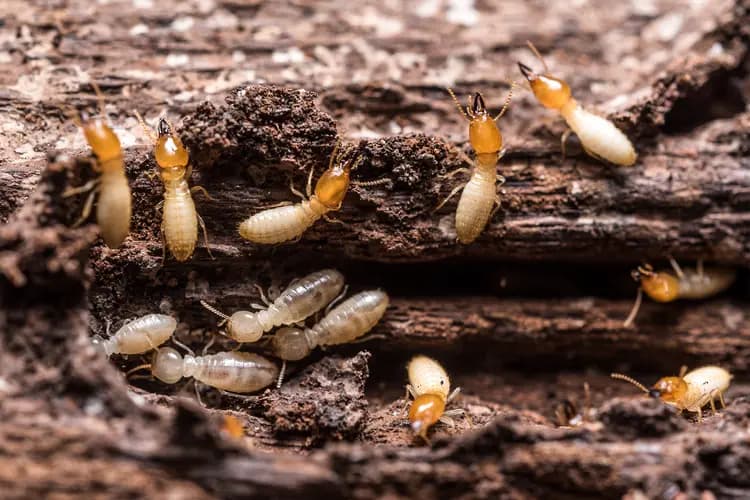
This is the single most common question we get during spring swarm calls. The visual differences are clear once you know what to look for:
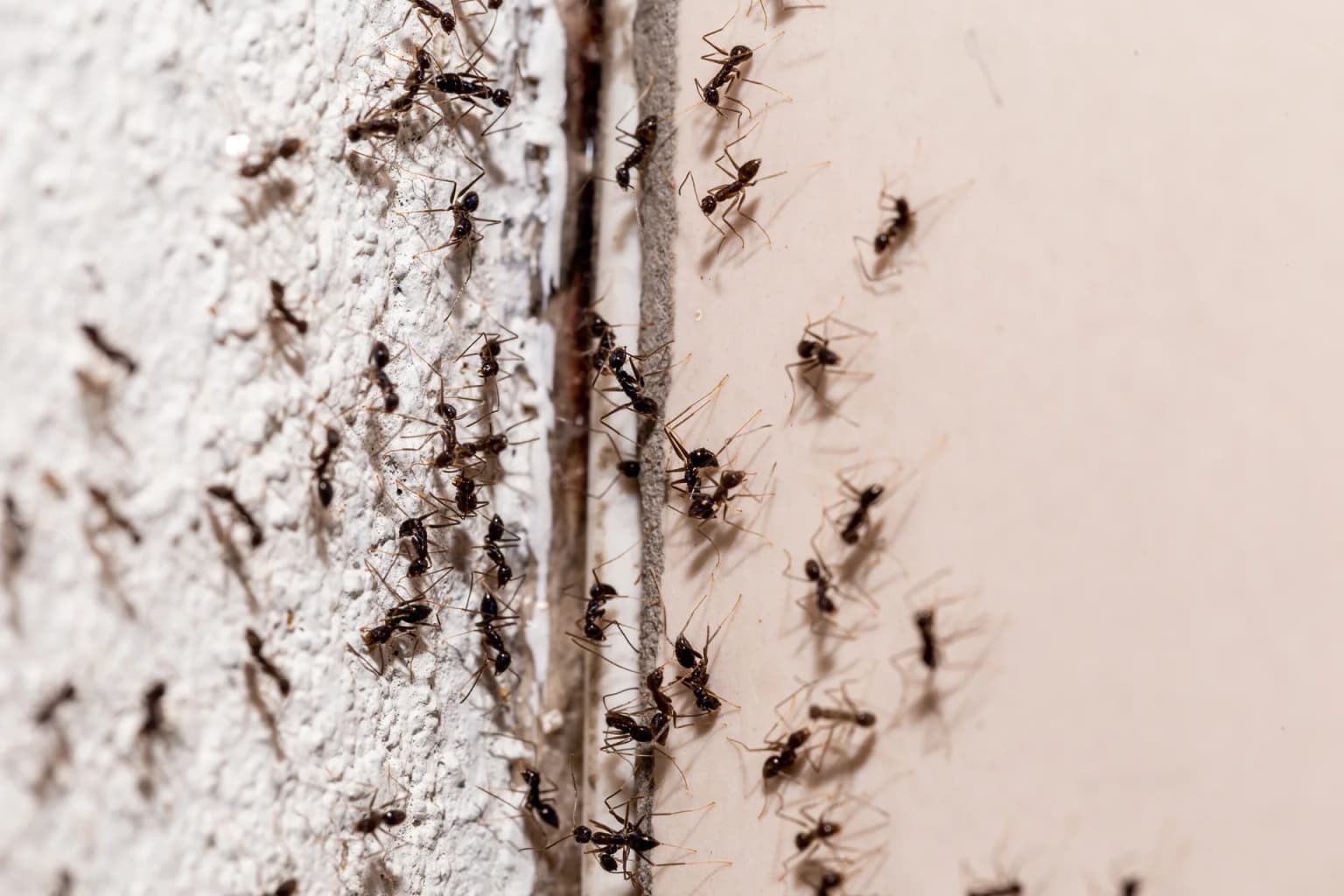
- Wings: Termite swarmers have two pairs of equal-length wings that extend well past the body. Flying ants have a larger front pair and smaller rear pair, with wings roughly body-length.
- Waist: Termites have a straight, tube-like body with no waist constriction. Ants have a distinct pinched waist — the characteristic "ant waist."
- Antennae: Termite antennae are straight and beaded. Ant antennae are elbowed — bent at a sharp angle.
- Shed wings: Both termites and ants shed wings after mating. A pile of equal-length wings near a window sill or threshold is a strong indicator of termites.
Pro Tip
Collect a few of the insects in a small container or photograph them clearly before calling. We can often identify the species from a photo without an in-person visit.
Drywood vs. Subterranean: Different Swarms, Different Problems
Monterey County has both species, and they swarm differently:
- Drywood termites (Incisitermes species): Swarm in late summer and early fall in most of California, but Monterey County's mild coastal climate produces swarms as early as March–April on warm days. Look for emergence from wood surfaces — windowsills, door frames, attic beams. Drywood colonies live entirely within the wood; no soil contact required.
- Subterranean termites (Reticulitermes hesperus): Swarm in late winter and spring, typically on warm, sunny days following rain — often January through April. Swarmers emerge from the soil or from mud tubes on the foundation. They require soil contact and moisture to survive.
- Dampwood termites (Zootermopsis species): More common in Santa Cruz County but present in moisture-affected structures throughout coastal Monterey County. Swarm in late summer. If you're seeing large, dark swarmers (up to 1 inch), suspect dampwood.
Where to Look After a Swarm
After observing a swarm, inspect these specific locations before calling:
- Window sills and near light sources — swarmers fly toward light. Piles of shed wings here are a reliable sign.
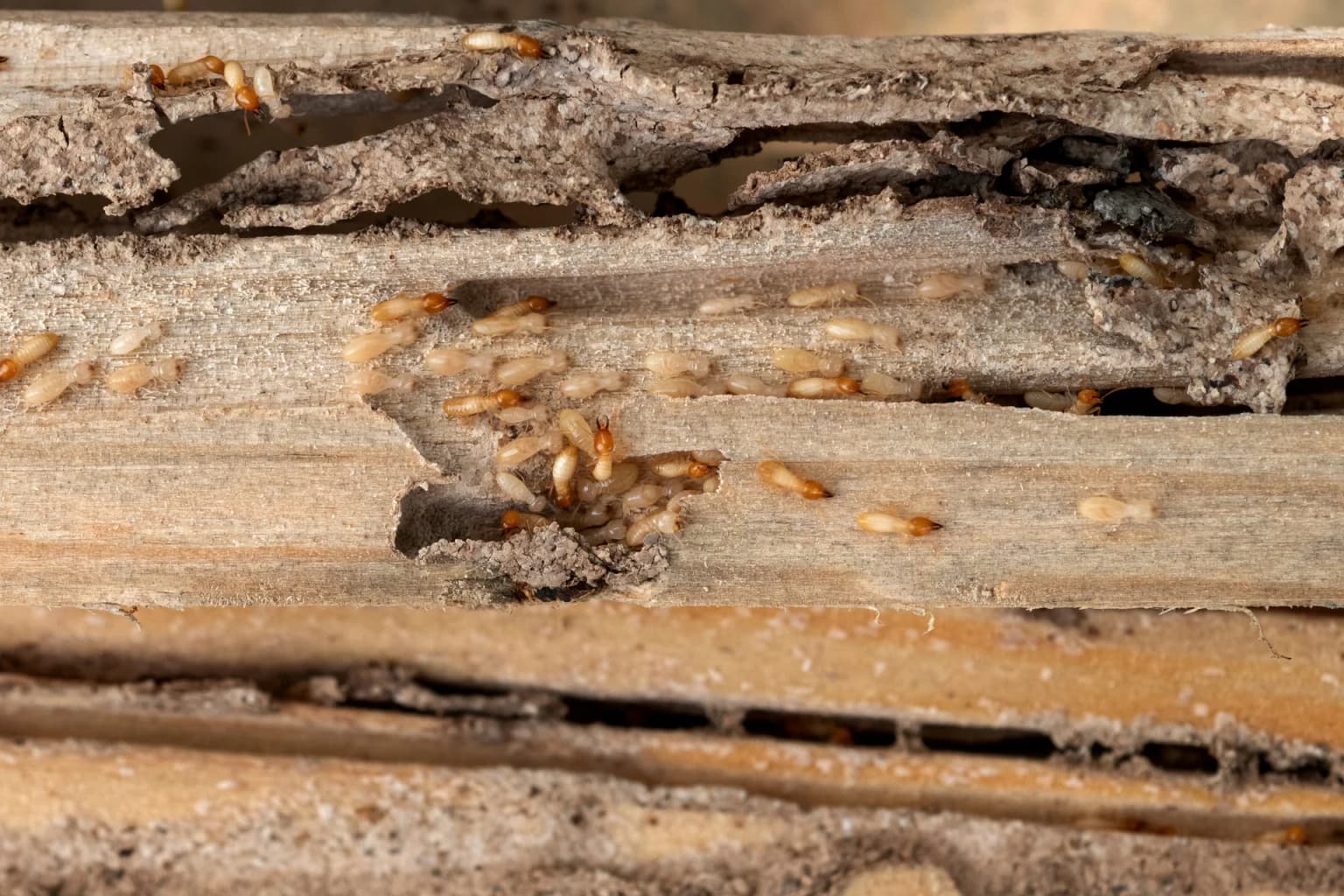
- Attic — the primary harborage for drywood termite colonies in older Monterey County homes. Look for fecal pellets (tiny, 6-sided wood-colored cylinders) in corners and on horizontal surfaces.
- Foundation perimeter — for subterranean termites, look for mud tubes running up the concrete foundation, crawl space piers, or sill plates.
- Under sinks and around plumbing — moisture-affected wood attracts both subterranean and dampwood species.
Important
Do not disturb mud tubes or treat with over-the-counter sprays before a professional inspection. Disrupting tubes causes termites to relocate deeper into the structure, making treatment more difficult.
The Coastal Monterey County Termite Reality
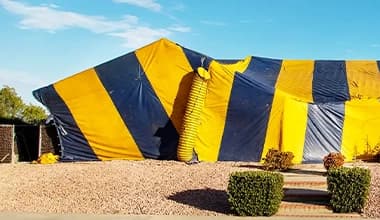
Monterey County has among the highest drywood termite activity rates in California. The reasons are specific: the mild year-round temperatures allow colony activity 12 months a year; the fog belt provides the humidity that softens wood and accelerates termite entry; and the housing stock — a significant proportion of homes in Monterey city, Pacific Grove, Carmel, and the older Salinas neighborhoods were built before 1960 using old-growth fir and redwood framing that termites can exploit for decades. A Victorian-era home in the Presidio neighborhood of Monterey that has never had a termite inspection has almost certainly had some drywood activity. The question is extent, not presence.
What Happens at a Termite Inspection
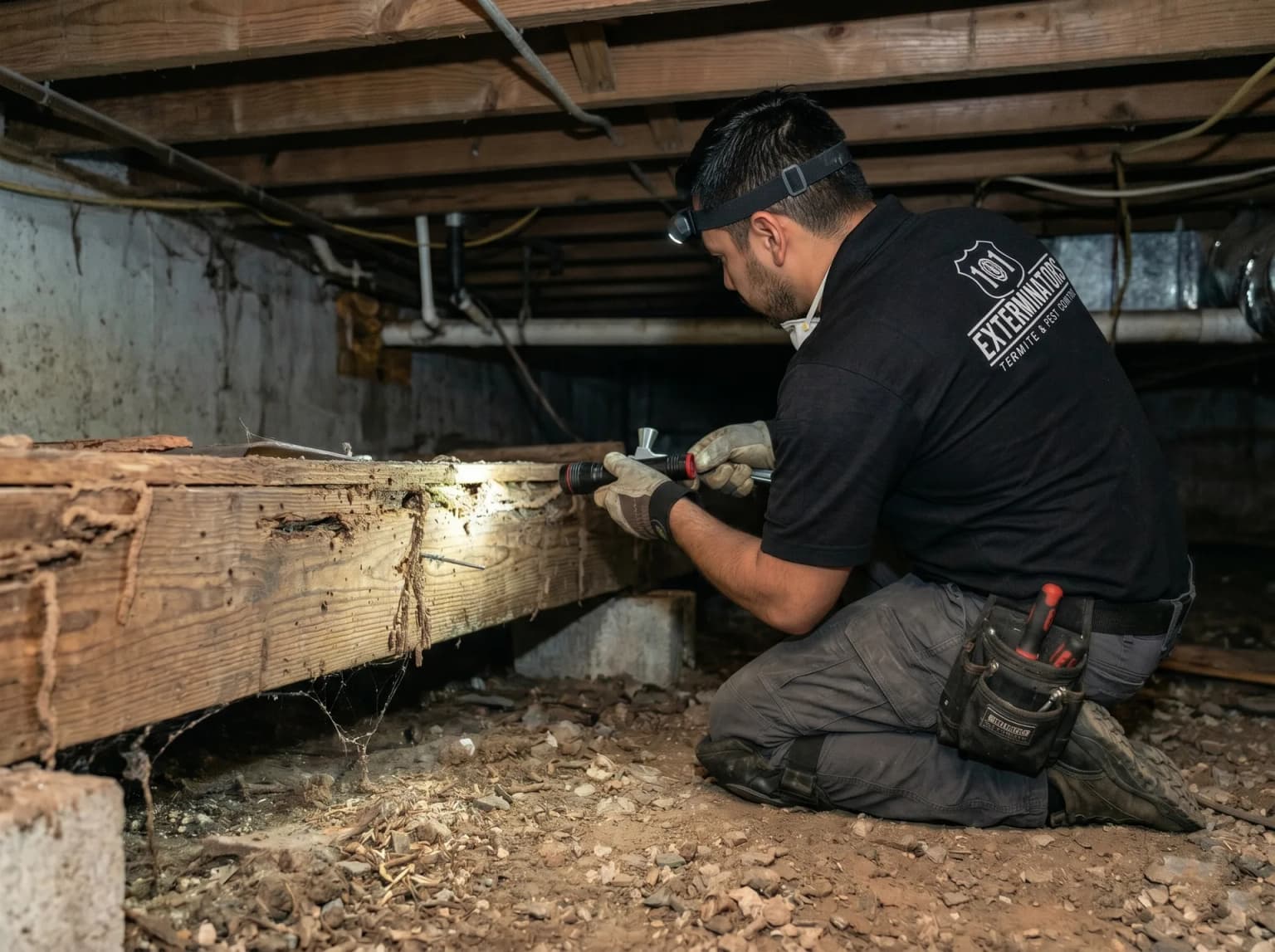
A California-licensed structural pest inspector examines all accessible areas of the structure — attic, crawl space, garage, subarea, and exterior — and issues a WDO (Wood Destroying Organism) report. The report classifies findings into Section 1 (active infestation or damage requiring immediate treatment) and Section 2 (conditions conducive to future infestation). The inspection takes 1–2 hours for an average home. The WDO report is the standard document required for real estate transactions in California and is valid for 90 days from inspection date.
Related Resources
Frequently Asked Questions
I found a pile of wings near my window — do I definitely have termites?
A pile of equal-length wings near a window or threshold is a reliable indicator of termite swarming. Ants also shed wings but the wings are unequal in length. We recommend a professional inspection within 1–2 weeks of observing a swarm — the colony exists regardless of whether you find the swarmers.
When do termites swarm in Monterey County?
Subterranean termites swarm January through April, typically on warm sunny days after rain. Drywood termites swarm March through October in our mild coastal climate, with peak activity in late spring and early fall. Dampwood termites swarm July through September.
Should I be worried if I only see a few swarmers?
A small swarm (a few insects) doesn't necessarily indicate a large or highly active colony. But even a small swarm means an established colony exists. We recommend a professional inspection to assess the extent and whether treatment is needed.
How much does a termite inspection cost in Monterey County?
101 Exterminators offers a free pest evaluation for homeowners — a licensed technician looks at what you are seeing and tells you verbally what you are dealing with, with nothing issued in writing. For a real estate transaction requiring a formal WDO report, what you need is an official structural pest inspection; we provide a written estimate based on the structure size and type. The report is valid for 90 days and meets California real estate disclosure requirements.
What's the difference between a Section 1 and Section 2 finding?
Section 1 findings require corrective action before a property can transfer (in most real estate transactions) — active infestation, damage, or conditions that directly facilitate infestation. Section 2 findings are conducive conditions that increase risk but don't represent current active infestation — wood-to-soil contact, moisture-damaged wood, or conditions that could lead to future infestation.
Written by
101 Exterminators Inc.
CA Licensed Structural Pest Control · SPCB Lic. #9119 · Serving Central California since 2005
The 101 Exterminators team has been treating homes and businesses across Monterey, Santa Cruz, San Benito, and Santa Clara counties since 2005. Our technicians hold California SPCB Branch 2 and Branch 3 licenses and draw on 20+ years of real-world pest management experience in Central California.