101 Exterminators Inc.
CA Licensed Structural Pest Control · License #PR8216
In Central California, the rodent pressure window opens in September when agricultural harvests disrupt field colonies and outdoor food sources diminish ahead of winter. Roof rats and Norway rats that have been living in the yard, in agricultural adjacencies, or in neighboring structures begin actively seeking access to heated buildings. A systematic exclusion pass on your home in September or October prevents the problem entirely — before the first rat is inside the wall.
Know Which Rodent You're Dealing With
Roof rats and Norway rats are the two dominant structural rodent species in Central California, and they require different exclusion strategies:
- Roof rats (Rattus rattus) — the dominant species in Monterey, Santa Cruz, and most of Santa Clara counties. Agile climbers that access structures via trees, utility lines, and rooflines. They nest in attics, in dense vegetation, and in raised areas. Signs: scratching sounds at night from above, droppings along walls and in attic, gnaw damage to wiring and wood in upper areas of the structure.
- Norway rats (Rattus norvegicus) — more common in urban dense areas (San Jose, Hollister, Salinas warehouse district) and in agricultural adjacencies. Ground dwellers that burrow. Access structures at the foundation level. Signs: burrow holes near the foundation, droppings in crawl spaces and basements, heavy gnaw damage at lower entry points.
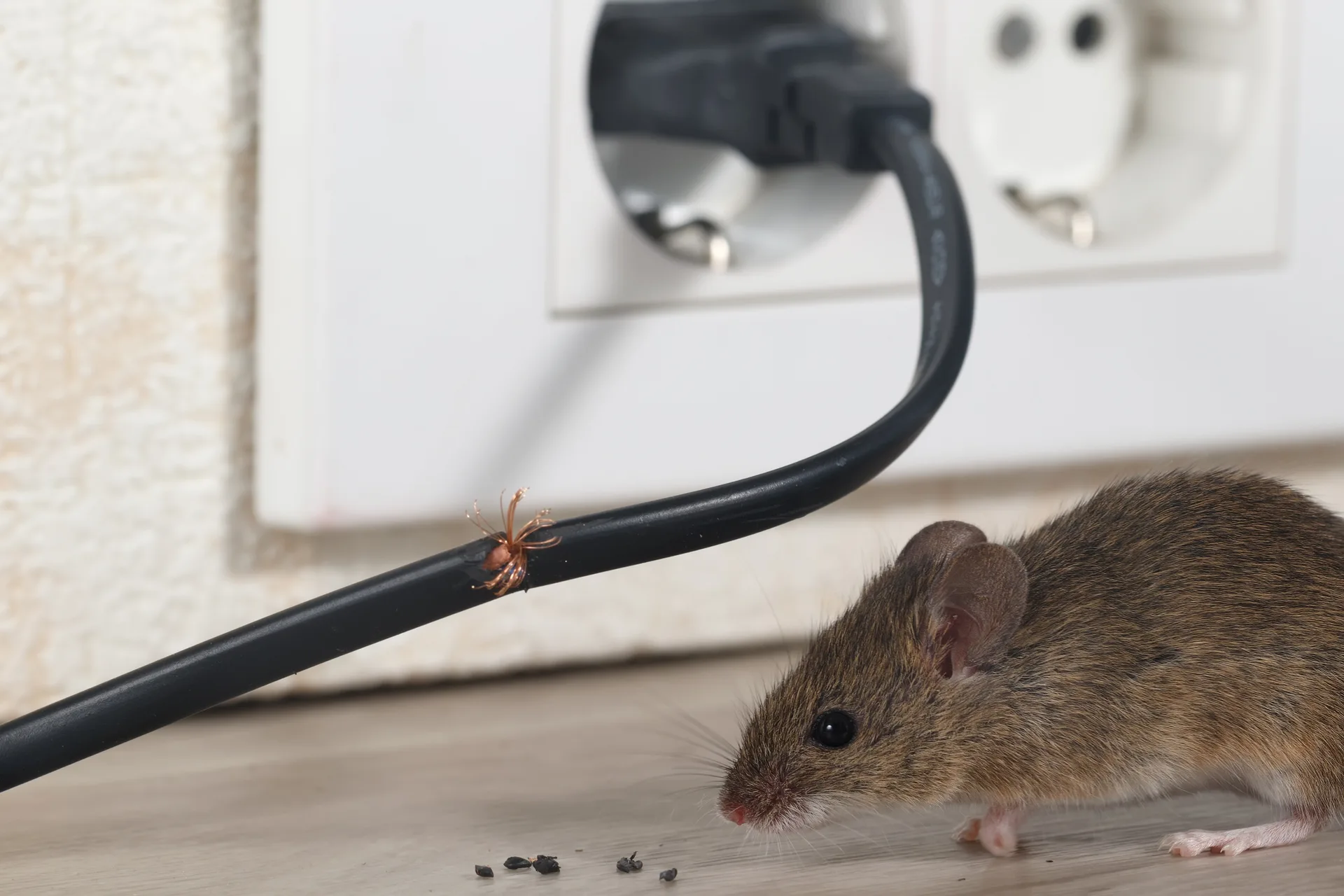
- House mice (Mus musculus) — present in all areas but particularly active in rural and semi-rural properties bordering fields. Can enter through gaps as small as a dime. Most active indoors October through March.
The Exclusion Checklist: Exterior
Complete this inspection systematically, starting at the roofline and working down:
- Roof vents and soffits — the #1 entry point for roof rats. Inspect all roof vents for torn or missing screens. Check soffits for gaps, warped panels, or openings where rats can squeeze through. Standard mesh screening (1/4-inch hardware cloth) should cover all roof vents.
- Tree branches over the roofline — roof rats use overhanging branches as bridges to the roofline. Trim all branches to maintain a minimum 3-foot clearance from the structure.
- Utility line entry points — where cable, electrical, gas, and HVAC lines penetrate exterior walls. Even a gap the width of a pencil is accessible to mice. Seal with steel wool packed tightly and covered with hardware cloth or sheet metal flashing.
- Garage door bottom seal — worn rubber seals create gaps of 1/2 inch or more. Replace any garage door bottom seal that shows light gaps when closed.
- Foundation vents (crawl space) — inspect all crawl space vents for torn screening. Norway rats and mice enter crawl spaces through damaged vent screens.
- Pipe penetrations — all plumbing entry points through the exterior wall should be sealed with a combination of steel wool and expanding foam (rodents won't chew through steel wool).
- Ivy and dense ground cover against the house — a mat of ivy against the foundation provides perfect harborage. Either clear it or maintain a 12-inch clear zone between the ivy and the structure.
The Exclusion Checklist: Interior
After securing the exterior, inspect inside for existing access points:
- Under kitchen and bathroom sinks — gaps around pipes where they enter through the cabinet floor or wall. These are among the most common interior entry points.
- Dryer vent — ensure the exterior dryer vent has a functional flap that closes when the dryer is off. A stuck-open dryer vent is a direct pathway into the wall cavity.
- Fireplace damper — an open damper allows roof rats direct access from the chimney into the living area. Install a chimney cap with wire mesh sides.
- Garage-to-house door sweep — the door between the garage and living space should have a functional door sweep with no gaps.
- Attic access hatch — attic hatches should close flush with no gaps around the perimeter.
Pro Tip
The single fastest and most effective exclusion material is 1/4-inch hardware cloth (galvanized steel mesh). Rats will gnaw through caulk, foam, rubber, and wood. They cannot chew through hardware cloth.
Food Sources That Attract Rodents
Exclusion without source removal is incomplete. Eliminate what draws rodents to your property:
- Bird feeders — one of the most common rodent attractants we see in Salinas residential yards. Spilled birdseed on the ground directly under feeders feeds roof rats and Norway rats. Move feeders at least 15 feet from the structure, or stop using them during September–March.
- Fruit trees — fallen and overripe fruit is a primary food source for roof rats. Harvest fruit promptly and remove fallen fruit from the ground.
- Compost bins — open compost bins with food scraps attract rats. Use enclosed compost bins with rodent-proof bases.
- Pet food left outdoors — never leave pet food outside overnight. Store dry pet food in sealed metal or heavy plastic containers.
- Garbage — ensure trash can lids seal fully. Roll-cart lids that don't seal create feeding opportunities.
The Salinas Valley Context
Properties adjacent to agricultural fields in the Salinas Valley experience rodent pressure that differs from urban areas. Harvest events — particularly the large-scale mechanical harvest of lettuce and strawberries — disrupt field colonies and trigger mass movement of rodents toward permanent structures. This typically happens in October–November in the Salinas Valley. If your property borders open agricultural land, budget for annual exclusion work and consider quarterly perimeter monitoring. The colony pressure from adjacent fields is effectively continuous; exclusion must be maintained to be effective.
Related Resources
Frequently Asked Questions
When should I rodent-proof my home in California?
September and October are the optimal months — before harvest disruptions push field rodents toward structures and before temperatures drop enough to make interior spaces attractive. If you're already hearing scratching in October, the exclusion window has already partially closed; use trapping to address existing activity while completing exclusion.
What's the most effective rodent exclusion material?
1/4-inch hardware cloth (galvanized steel mesh) is the most reliable material for entry point sealing. Rats can gnaw through caulk, foam sealant, rubber, and wood. They cannot chew through galvanized steel mesh. Use steel wool as a temporary filler in combination with hardware cloth or sheet metal for permanent sealing.
Can mice really get through a gap the size of a dime?
Yes. A house mouse can squeeze through a gap of approximately 6mm (1/4 inch). A Norway rat needs about 19mm (3/4 inch). A roof rat needs about 12mm (1/2 inch). This is why any penetration in the exterior wall — even one that looks trivially small — must be sealed.
I sealed my house and still have rodents inside. What happened?
You likely sealed with a rodent already inside, or there's an entry point you haven't found. Rodents won't chew out — they'll stay inside the warm, food-rich structure. If you seal while rodents are present, use trapping simultaneously inside the structure. Never use poison bait in the attic or wall voids — a rodent dying in an inaccessible void will create a significant odor problem for 2–3 weeks.
How much does rodent exclusion service cost?
A professional rodent exclusion typically costs $300–$1,500 depending on the structure size, the number of entry points identified, and whether trapping is included. We provide a free inspection with a written estimate before any work begins.
Written by
101 Exterminators Inc.
CA Licensed Structural Pest Control · License #PR8216 · Serving Central California since 2005
The 101 Exterminators team has been treating homes and businesses across Monterey, Santa Cruz, San Benito, and Santa Clara counties since 2005. Our technicians hold California SPCB Branch 2 and Branch 3 licenses and draw on 20+ years of real-world pest management experience in Central California.