

101 Exterminators Inc.
CA Licensed Structural Pest Control · SPCB Lic. #9119
Three habits prevent most household pest problems, and none of them involves a chemical. Close the gaps a pest uses to get in, take away the standing water it needs to stay, and keep wood and dense growth off the walls of the house. In Monterey, Santa Cruz, San Benito and Santa Clara counties there is a fourth: timing. This coast runs its own pest calendar, and the work that pays off is done in the month before pressure peaks rather than the week after. Everything below is work a homeowner can do with a flashlight, a caulk gun, and one Saturday.
Close the Gaps First
A mouse gets through a gap about a quarter inch wide, which is roughly the thickness of a pencil, and an adult German cockroach flattens into a crack about a sixteenth of an inch. Nothing you spray does as much as closing those openings, because a sealed house makes every other measure hold. Walk the perimeter with a flashlight and look at these six places.
- Plumbing penetrations — Where supply and waste lines pass through the wall, especially under kitchen and bathroom sinks. These are usually open, or stuffed loosely with steel wool that has already rusted through.
- Utility conduit entries — Cable, electrical, and HVAC lines punched through exterior siding, then never sealed by the trade that punched them.
- Garage door bottom seal — A worn rubber seal leaves a gap along the slab, and the garage is the room a rat reaches first.
- Foundation vents — Torn or missing crawl space vent screens open a route for rodents and give subterranean termites cover to work in.
- Door sweeps — The bottom of back doors and garage service doors is the most common rodent entry point we find on inspection.
- Roof vents and soffits — The way in for roof rats, which are established across Monterey and Santa Cruz counties and get onto roofs from branches and utility lines.
Pro Tip
Give the exterior twenty minutes at ground level with a flashlight held flat against the wall, so the beam rakes the surface and every gap throws a shadow. Any opening you can push a pencil into is wide enough for a mouse.
Water Is the Thing They Cannot Do Without
Most of the infestations we treat between Salinas and Watsonville trace back to water rather than food, and the marine layer along this coast keeps the ground damp longer than an inland yard stays damp. Subterranean termites need soil moisture and a path to wood, so a weeping drip line beside the foundation builds the conditions for them. Pacific dampwood termites, which are more at home on this coast than in most of the state, go after wood that is already wet. Cockroaches and silverfish gather at plumbing leaks. Rodents nest in a damp crawl space because it is warm and nobody goes down there.
- Fix dripping faucets and weeping pipe joints under sinks the week you notice them.
- Aim sprinkler heads away from the walls so spray lands on planting rather than on the foundation and the siding.
- Put a vapor barrier down in the crawl space if there is bare soil under the house. One job cuts termite pressure, rodent nesting, and fungal decay at the same time.
- Extend downspouts so gutter water leaves the foundation instead of pooling against it.
- Repair roof leaks before the next rainy season. Wet roof framing is what dampwood termites and carpenter ants are looking for.
The Yard Decides What Reaches the House
Everything that ends up in the kitchen staged somewhere in the yard first. These are the conditions that show up most often in our inspection notes on properties in older Monterey, Pacific Grove, and Salinas neighborhoods.
- Wood touching soil — Raised planters, fence posts, deck framing, and wood bed borders in contact with the ground give subterranean termites a covered path into the structure. Keep at least six inches of clear air between any wood and the soil.
- Ivy and dense ground cover — A mat of ivy against the foundation is rodent housing with a roof on it. Both Norway rats and roof rats nest in it, and it hides the wall so you cannot inspect what is behind it.
- Firewood against the wall — Move the stack at least twenty feet from the house and get it up off the ground on a rack.
- Branches touching the roofline — Roof rats walk overhanging limbs onto the roof and work from there to a vent or soffit gap. Cut back so nothing reaches the eave.
- Bird feeders close to the wall — Spilled seed feeds mice and Norway rats. Put the feeder well out in the yard and sweep under it.
The Central California Pest Calendar
Timing decides whether prevention work lands. Our seasons run differently from the national advice, because winters here are mild enough that very little goes fully dormant and the swarm months are not the ones most guides print.
- February through May — Western subterranean termites swarm, usually during or just after a warm rain. Winged reproductives at ground level or a scatter of equal-length wings on a sill is the season announcing itself.
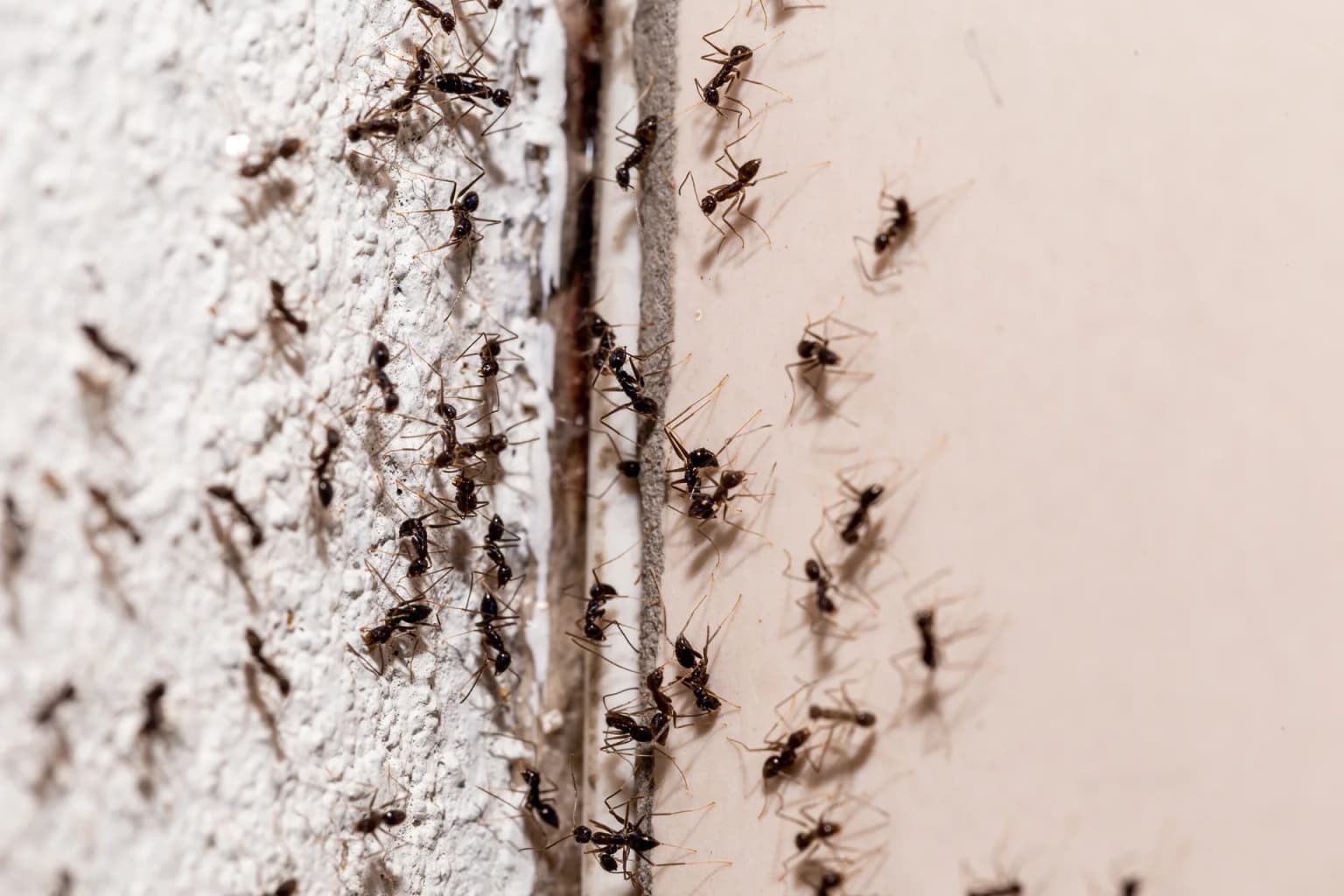
- Spring into early summer — Argentine ants pour indoors after the first real rain that follows a dry stretch, and again when summer heat dries their outdoor food. Salinas Valley irrigation keeps that movement going all season.
- August through October — Drywood termites swarm here, later than the spring date most national guides give, on warm afternoons after a run of heat. Yellowjacket colonies hit maximum size and peak aggression over the same weeks.
- September through November — Rodent season. As nights cool and outdoor food thins out, mice and roof rats work the building envelope looking for a way in. This is when the door sweeps and vent screens earn their keep.
- Winter — Cockroach activity moves indoors and concentrates near heat and plumbing. Subterranean activity continues underground through the wet months without producing anything you can see.
Did You Know
Argentine ant colonies have many queens and split rather than die when disturbed, which is why a hardware store spray moves the trail instead of ending it. A licensed technician picks a non-repellent product the foragers carry home, so the treatment reaches the queens rather than scattering the colony into two.
Food Storage That Does Not Feed a Colony
Store dry goods in hard-sided airtight containers rather than the bag or box they came in, and that includes flour, cereal, rice, nuts, birdseed, and pet food. Cardboard and plastic film stop nothing. Empty trash before the bag is full, rinse food residue out of recycling, and take pet bowls up overnight. Once a year, pull the stove and the refrigerator out and clean the floor and the coils behind them, because the grease and crumbs collecting under a range will support a cockroach population by itself.
Where Prevention Runs Out
Some problems are outside the reach of anything a homeowner does. A subterranean colony feeding on your sill plate may be nesting well out under the yard, or under the street, and no amount of yard work makes your house harder to find from down there. Argentine ants in a Salinas neighborhood are one continuous colony running across yards and sidewalks, so a treated property gets re-entered from the untreated one next door. Drywood termites fly in and start a new colony directly in exposed framing without ever touching the ground. For those three, scheduled inspection and a planned treatment program does what sealing and housekeeping cannot.
Related Resources
Frequently Asked Questions
What is the single most useful thing I can do to prevent pests?
Seal the entry points. A house with pipe penetrations closed, door sweeps intact, and foundation vents screened has fewer pest problems than a treated house full of gaps, because every pest that never gets inside costs nothing to control. Start under the sinks and at the base of the garage door, since those two spots account for most of what we find.
How often should I have a professional pest inspection?
Once a year is a sensible floor for a home in Monterey or Santa Cruz county, and late summer is a good month to book it because drywood swarmers are flying between August and October. Twice a year makes sense for a home with a termite history, a property backing onto open land or a creek corridor, or a Salinas Valley house surrounded by irrigated ground.
Do ultrasonic pest repellers work?
No. Independent testing has not found them effective against mice, cockroaches, or other household pests, and the Federal Trade Commission has warned sellers of these devices about claims they cannot support. The money is better spent on a caulk gun, hardware cloth for the vents, and a set of door sweeps.
Why do ants come in every spring even though the kitchen is clean?
Argentine ants are foraging at a scale that has nothing to do with your housekeeping. A colony spanning several blocks sends scouts through every crack it can reach, hunting moisture and sugar, and it does that hardest right after rain and again when the ground dries in summer. Sealing the entry cracks and drying out the strip of soil against the foundation does more than cleaning ever will.
Should I worry about termites if I have never seen a swarm?
Yes. A colony can work inside framing for years before it produces winged reproductives, and a swarm that happens while you are at work leaves nothing behind but a few wings on a windowsill. The reliable check is a licensed structural pest control inspection that covers the attic, the crawl space, and the exterior perimeter, because that finds galleries and mud tubes long before anything flies.
Written by
101 Exterminators Inc.
CA Licensed Structural Pest Control · SPCB Lic. #9119 · Serving Central California since 2005
The 101 Exterminators team has been treating homes and businesses across Monterey, Santa Cruz, San Benito, and Santa Clara counties since 2005. Our technicians hold California SPCB Branch 2 and Branch 3 licenses and draw on 20+ years of real-world pest management experience in Central California.