
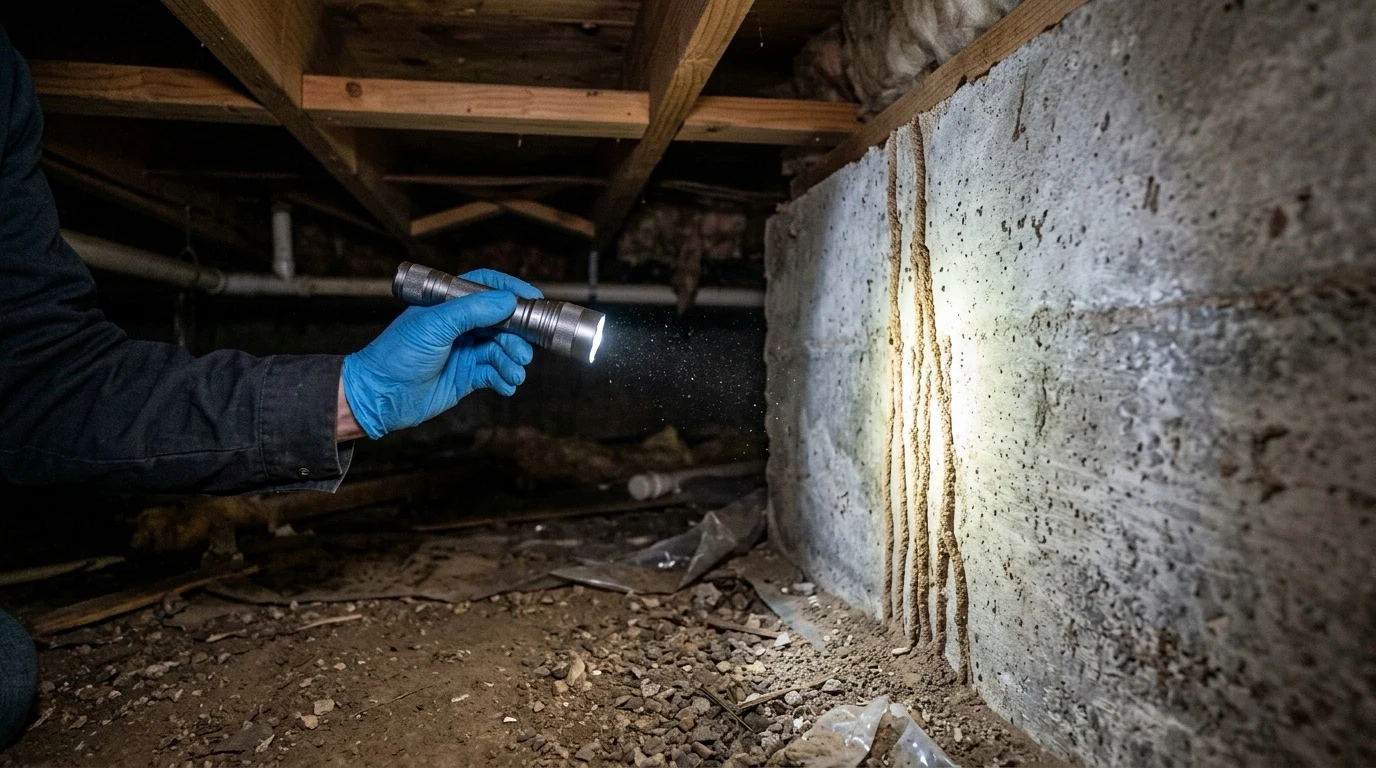
1Three termite groups leave different clues
A narrow earthen line climbing a foundation points to a different problem from a pile of pellets below a window frame. UC IPM describes subterranean termites as soil dwellers that reach wood through direct contact or shelter tubes. Drywood termites nest in relatively dry, sound wood above ground and may leave hard pellets beneath tiny openings. Dampwood termites favor wood that stays wet, often from soil contact or a water leak.
Reticulitermes subterranean termites occur through much of California. Western drywood termites (Incisitermes minor) occur along many coastal areas and inland as well. UC IPM also notes two dampwood species, Zootermopsis angusticollis and Z. nevadensis, in central and northern coastal areas. A dampwood finding still depends on the condition of a particular board, not the county on a map. Homes in Monterey, Santa Cruz, San Benito, Santa Clara, San Francisco, San Mateo, and Alameda counties can present different construction and moisture conditions. A species name or treatment plan should follow the evidence at the property.
Wood-boring beetles and carpenter ants can leave debris near the same trim or framing. A photograph of the debris and its source helps, but appearance alone may not settle the identification. Our wood-destroying insects guide covers those alternatives.
2What a visible sign can and cannot tell you
UC IPM calls drywood pellets distinctive: they have six flattened sides. Yet pellets alone cannot show whether a colony is active or how far it extends within a board or building. Movement can also dislodge old pellets. Note whether new material appears after the original pile has been photographed and cleared, and tell the inspector what changed.
Shelter tubes are a common sign of subterranean termites. Their route matters: a tube from soil to a sill raises a different question from a tube on an isolated landscape timber. Leave the tube intact for the inspector to trace. Damaged wood, blistered surfaces, and discarded wings also deserve attention, but none of them is a sound way to estimate repair work from a photograph.
Winged termites may emerge from a building or from a nearby outdoor colony. UC IPM says a swarm alone does not prove that a building is infested. Flight timing varies by species and place, so the date helps an inspector but does not make the diagnosis. Winged ants can look similar; their pinched waists and unequal wing pairs help distinguish them from the broad-waisted, equal-winged termite swarmers.
Keep a clear photo of the sign in place, a wider photo that shows the room or exterior wall, and the date. If you can collect a loose wing or insect without disturbing the wood, keep it for identification.
3A safe first look from accessible ground
A useful first look is a record of where evidence appears. It is not an attempt to open walls or prove that a board is sound. Walk the accessible perimeter and note soil touching wood, stored lumber against the building, visible water leaks, and tubes on exposed foundation surfaces. Indoors, record pellets or shed wings below windows, doors, trim, and other accessible wood.
Do not break a tube, probe a joist, climb to an eave, or enter a tight crawlspace to improve the evidence. The report will be stronger if the inspector can see an undisturbed sign and knows exactly where you found it. Arrange access to ordinary doors and hatches, then explain any locked, shared, or unsafe area before the visit.
- 1
Mark the spot
Write down the room or exterior side, the nearby feature, and when you first noticed the sign. A wide photo gives the inspector a starting point.
- 2
Preserve what is easy to preserve
Keep loose wings or an insect in a small container if you can collect them safely. Leave tubes, wood, and concealed spaces undisturbed.
- 3
Share the moisture history
Tell the inspector about leaks, past repairs, or recurring dampness, even when the surface looks dry on inspection day.
If framing feels unstable, water is near wiring, or access requires a ladder or entry into a confined space, keep clear and ask the appropriate professional to assess it.
4Use the inspection report to choose the next step
A written report helps you decide what to treat, repair, or inspect next. It names visible pest evidence, damaged wood, and conditions that may invite pests. It should also say which places the inspector could not check. A clean finding for open surfaces says nothing about what a covered wall may hide.
Read each recommendation beside the place where the inspector found the problem. A leak or wood touching soil calls for attention, but it does not prove active termites. Ask which item calls for pest control, wood repair, water repair, or another look. If access was blocked, ask what would allow a closer inspection and how that result will be recorded.
If a buyer or lender asks for a certificate, ask the company what it certifies and which areas it excludes. Under California law, a requested certificate speaks to visible and accessible areas. The Board’s law in Sources gives the exact terms. The Related Reading article on Section 1 and Section 2 explains how to read the report’s two types of findings.
5Match treatment to the termite and the reach of inspection
If an inspector can locate a drywood colony in a small group of boards, local work or wood replacement may fit. A local method reaches only that area. Termites behind paint or a wall may be missed. UC IPM says whole-building work can reach hidden drywood sites, though it will not keep new termites from arriving later. Ask which boards were checked and where the inspector remains unsure.
Subterranean termites require a different plan because the colony is linked to soil. A professional may propose a soil treatment, a monitored bait program, correction of entry conditions, or a combination. A drywood whole-structure method is not a substitute for assessing that soil route. Dampwood findings also call for a plan to correct the water that keeps the wood wet.
In 2026, California’s Department of Pesticide Regulation found that local treatment options are often effective and widely used. It also found few viable options that match the scope of whole-structure fumigation. Research has yet to fully compare cost and success across these choices. Ask what each proposal covers, what it may miss, and how the result will be checked. If a guarantee is offered, state law requires the report and contract to give its terms and length.
- Ask where each termite finding was observed and what evidence supports the identification.
- Ask which wood and spaces the proposed treatment reaches, and which ones it does not.
- Ask whether wood repair and moisture correction are included, separate, or still need a contractor’s assessment.
- Ask what follow-up inspection or monitoring is in the written scope, and what the stated guarantee covers.