
101 Exterminators Inc.
CA Licensed Structural Pest Control · SPCB Lic. #9119
On a California Wood-Destroying Organism (WDO) inspection report, Section 1 items are active infestations or existing damage that must typically be corrected before a lender will fund the loan — these require a clearance certificate. Section 2 items are conditions conducive to infestation (like wood-to-soil contact or a leaking gutter) that are noted for disclosure purposes but do not have to be corrected for the sale to close. Understanding which category applies to findings on your report is the difference between a smooth closing and an unexpected repair scramble in the final week of escrow.
What Is a WDO Inspection?
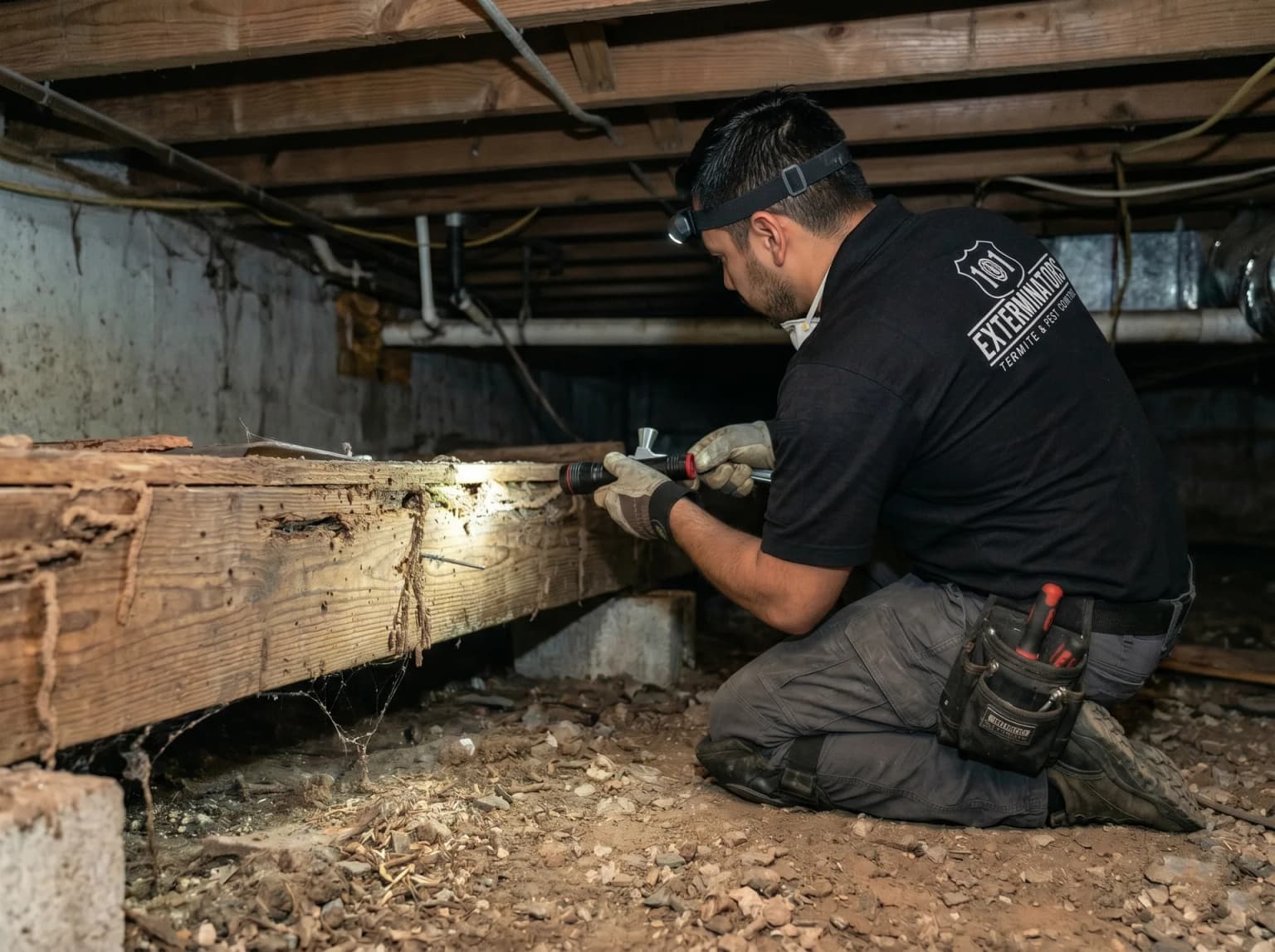
WDO stands for Wood-Destroying Organism — the official term California's Structural Pest Control Board uses for the category of inspection that covers termites, wood-boring beetles, and fungal wood decay. In real estate transactions throughout Monterey, Santa Cruz, San Benito, and Santa Clara counties, a WDO inspection (often called a "termite inspection" or "pest inspection") is typically required by lenders before funding. The inspecting company must hold a California Structural Pest Control license, and the report is filed on a state-standardized form (PRPC-43) that every licensed company uses. The inspector examines all accessible structural areas of the building — subarea (crawl space), attic, garage, exterior wood, eaves, and decking. They probe wood with a tool called a sounding rod or awl to detect hollow, damaged areas, and look for evidence of active insects, past damage, and moisture conditions. The entire inspection typically takes 45–90 minutes depending on home size and access. All findings are categorized into one of two sections, each with distinct implications for the transaction. Buyers, sellers, and real estate agents should understand both before they receive the report.
Section 1: Active Infestation or Existing Damage
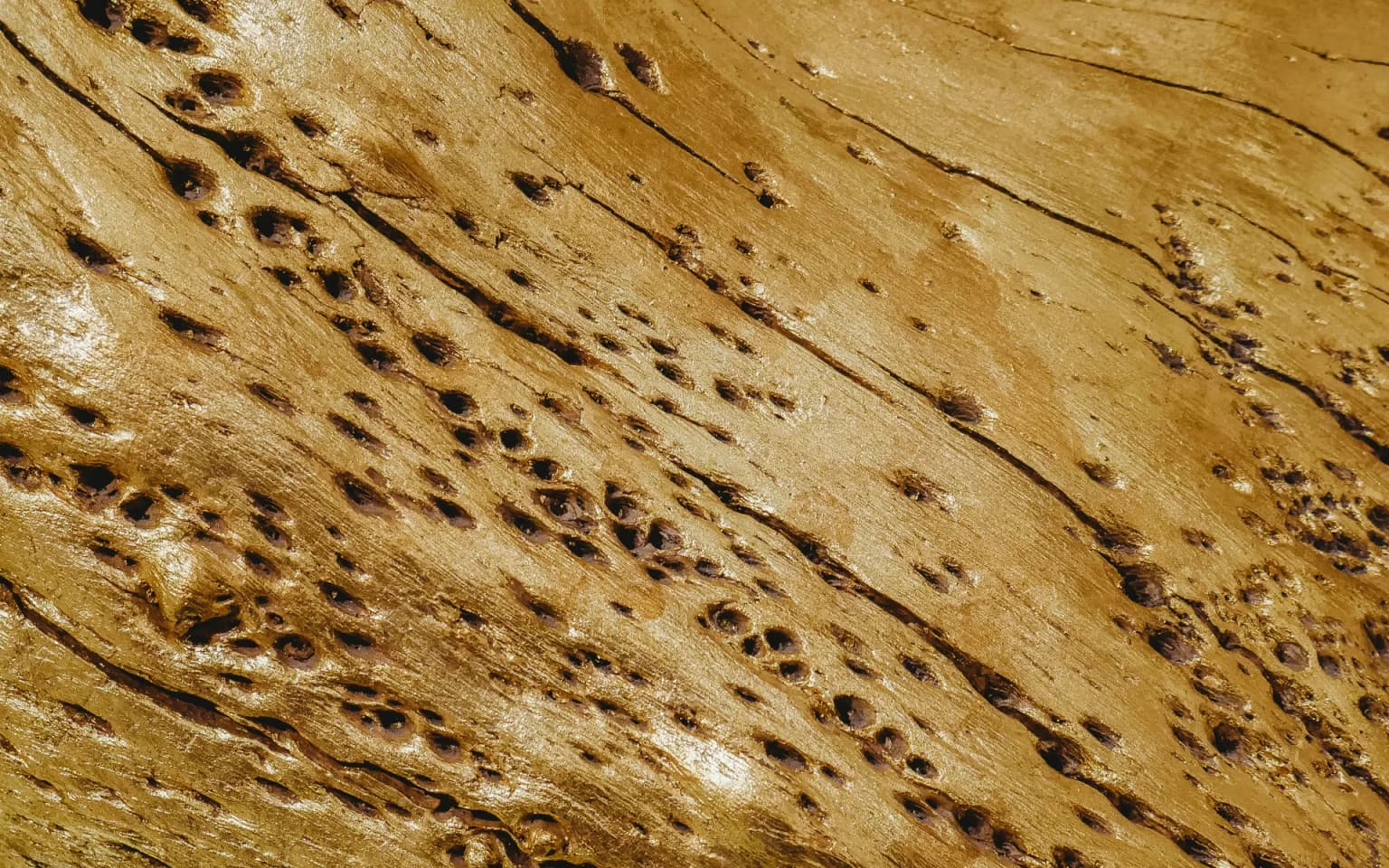
Section 1 encompasses conditions that are either currently active or have already caused structural damage. This includes live drywood termite colonies (evidenced by active frass, live insects, or fresh emergence holes), active subterranean termite mud tubes with live activity, wood-boring beetle infestations with fresh exit holes and frass, dry rot damage that is currently progressive (meaning moisture is still present and decay is ongoing), and fungal wood decay with sufficient moisture to support continued deterioration. The practical implication: most conventional lenders (Fannie Mae/Freddie Mac guidelines) require Section 1 items to be corrected and a clearance certificate issued before they will fund the loan. FHA and VA loans are particularly strict on this point. This means if your closing is in three weeks and a Section 1 finding is discovered, you need a licensed pest control company to complete the corrective work and issue a clearance within that window. Common Section 1 findings in Monterey and Santa Cruz counties include active drywood termite infestations in eave framing and window headers (especially in homes built before 1980), subterranean termite mud tubes in crawl spaces (frequent in homes in the Salinas Valley floor and areas with high soil moisture), and dry rot in deck ledger boards and porch posts caused by irrigation overspray or failed caulking. In Santa Clara County's older housing stock, wood-boring beetles in hardwood floors and structural beams are a notable Section 1 trigger.
Important
If you are selling and receive a report with Section 1 findings, do not wait to act. Clearance work during the last week of escrow is high-pressure and premium-priced. Schedule immediately.
Section 2: Conditions Conducive to Infestation
Section 2 covers conditions that don't represent active damage or live infestation today but create elevated risk for future problems if left unaddressed. Classic Section 2 findings include wood-to-soil contact (fence posts, deck supports, or landscaping timbers in direct contact with grade), inadequate subfloor ventilation that allows moisture buildup without active decay, evidence of old (inactive) termite damage that was previously treated and is no longer progressing, faulty grade (soil or mulch banked against the foundation sill), earth fill under a structure that reduces crawl space clearance, and debris in the subarea (wood scraps, cardboard, paper) that could attract termites. Section 2 findings do not have to be corrected for a conventional loan to close. However, they must be disclosed — they appear in the report and become part of the transaction record. In practice, buyers often negotiate Section 2 corrections into the purchase agreement as a seller credit or seller repair. Sellers who proactively address major Section 2 conditions before listing tend to have cleaner reports and smoother negotiations. In the Salinas Valley, the most common Section 2 findings are subfloor ventilation deficiencies (older ranch homes with minimal vent screens) and wood debris in crawl spaces left over from original construction. Coastal Santa Cruz properties frequently show evidence of historical fungal decay that has since dried out — technically Section 2 since it's no longer active, but worth monitoring.
The Clearance Process: What Happens After Section 1 Is Found
A clearance certificate is the document that tells the lender the Section 1 conditions have been corrected and the structure is free of active infestation or progressive damage. To obtain clearance, the licensed pest control company must complete the corrective work and re-inspect the treated areas. The process works as follows: For localized drywood termite infestations (a single infested rafter, a window header), the typical treatment is a direct wood treatment with a borate product or an injectable foam termiticide. This is same-day correctable in most cases. For more extensive drywood infestations in the attic framing or multiple areas of the structure, tent fumigation may be required — which takes three to five days including preparation, fumigation, and aeration. For subterranean termites, a liquid soil treatment or bait station installation is standard. Dry rot repair involves removing the damaged wood and replacing or sistering the structural members, then treating with a preservative. Once the work is complete, the inspector re-examines the corrected areas and issues the clearance certificate. This document is then provided to the lender and typically uploaded to the escrow file. Scheduling drives the calendar more than the paperwork does: the re-inspection has to wait until the corrective work is finished, and a fumigation adds the preparation and aeration days on top. Ask for the schedule in writing when the work is booked so escrow can plan against it.
Did You Know
Clearance certificates are issued per report. If new findings are discovered during corrective work that weren't visible at the original inspection, a supplemental report may be required — which can add time. This is why early scheduling matters.
What Determines Section 1 Clearance Cost?
The cost of Section 1 clearance depends entirely on what was found and how extensive the damage is. A single localized drywood termite infestation treated with a direct wood injection is at the low end. A whole-house fumigation is at the high end, scaling with the cubic footage of the structure. Subterranean termite liquid soil treatments and dry rot repairs fall in between and vary widely with the extent of the work — a simple porch post replacement is minor, while a rim joist repair requiring crawl space access is substantially more involved. Because every report is different, we provide a written estimate after the inspection rather than a one-size quote. In real estate transactions, Section 1 costs are often negotiated between buyer and seller. A common structure is the seller paying up to a negotiated cap with the buyer accepting responsibility for anything above. Another common approach is a seller credit to the buyer's closing costs in lieu of the repair, giving the buyer flexibility to choose their own contractor after close. We perform official structural pest (WDO) inspections for real estate transactions in Monterey, Santa Cruz, San Benito, and Santa Clara counties, with a written estimate for any corrective work before it begins.
Timeline: How Far in Advance to Schedule Before Closing
The most common mistake in real estate pest inspections is scheduling too late. Ideally, a WDO inspection should be ordered within the first two weeks of escrow — as soon as the inspection contingency period opens. This gives all parties maximum time to get bids, negotiate repairs, complete the work, and obtain clearance before the loan funding deadline. For a 30-day escrow: schedule the WDO inspection in the first week. For a 21-day escrow: schedule immediately upon opening. For a 45-day escrow: any point in the first three weeks is fine, but don't wait until the final stretch. If a fumigation turns out to be required, you need a minimum of 10–14 days from discovery to clearance — seven days to schedule the tent, three days for the fumigation process, plus time for the clearance re-inspection and document processing. If you discover this need in the final week of escrow, you're almost certainly looking at a close-of-escrow extension. We can often expedite scheduling for urgent real estate situations; call (831) 500-1613 and ask about our escrow-priority scheduling.
Pro Tip
Sellers: order your own pre-listing WDO inspection 2–3 weeks before going on market. It eliminates surprises, gives you time to competitively bid any corrective work, and signals transparency to buyers.
Choosing a Licensed WDO Inspector in Central California
Not all pest inspectors are created equal. In California, only companies holding a Structural Pest Control license (Branch 2 or 3) are legally authorized to conduct WDO inspections and issue the official PRPC-43 report accepted by lenders and escrow companies. Verify your inspector's license at the California Structural Pest Control Board's online lookup before booking. For real estate transactions in Monterey, Santa Cruz, San Benito, and Santa Clara counties, choosing a company that also performs corrective work is a practical advantage — if Section 1 is found, the same company can begin treatment immediately without additional bidding delay. Be cautious of inspection-only companies that cannot also perform the corrective work; you may receive a report that requires getting additional contractors involved during a time-sensitive escrow. 101 Exterminators Inc. holds a California Structural Pest Control license and performs both WDO inspections and all categories of corrective work including localized treatments, subterranean termite soil treatments, and fumigation coordination. We serve all four counties and provide same-week inspection scheduling for active real estate transactions.
Related Resources
Frequently Asked Questions
Who pays for Section 1 clearance in a California real estate transaction?
It's negotiable between buyer and seller and depends on the purchase agreement terms. In Monterey and Santa Cruz counties, the most common convention is the seller paying for Section 1 clearance up to a negotiated cap. However, there is no legal requirement that either party pay — it's determined by what was agreed in the contract. If the report comes back after offer acceptance, buyers and sellers typically renegotiate through their agents.
How long does Section 1 clearance take?
It depends on the correction, and the sequence is what sets the calendar rather than the paperwork. For a localized treatment such as direct wood injection or a subterranean soil application, the clearance re-inspection can follow soon after the work is finished. Fumigation adds more steps: scheduling the tent, the fumigation and aeration itself, then the re-inspection. We give you the schedule for your property in writing once the corrective work is booked. If your escrow is on a deadline, say so when you call at (831) 500-1613 so it can be factored into the scheduling.
Can I buy a house with Section 2 conditions on the WDO report?
Yes. Section 2 conditions are conducive conditions, not active infestations, and conventional lenders do not require them to be corrected before funding. You'll receive full disclosure of the conditions in the report and can negotiate with the seller over who addresses them. Many buyers accept Section 2 findings and address them after close at their own pace, since they represent risk management rather than urgent structural repair.
How far in advance should I schedule a WDO inspection before my closing date?
Schedule within the first one to two weeks of opening escrow — not the week before closing. If Section 1 findings require fumigation, you need a minimum of 10–14 days just for that process, before clearance paperwork is processed. Early inspection preserves negotiating flexibility and avoids costly escrow extensions. For a 30-day escrow, the WDO inspection should be one of the first items ordered.
Is a WDO inspection required for all California home sales?
Not legally required by the state for all transactions, but effectively required by most conventional, FHA, and VA lenders as a condition of loan approval. Cash transactions have no lender requirement, but are still strongly advisable for buyer due diligence. Real estate agents in Monterey and Santa Cruz counties almost universally include the WDO inspection as a standard contingency in purchase agreements, regardless of loan type.
Written by
101 Exterminators Inc.
CA Licensed Structural Pest Control · SPCB Lic. #9119 · Serving Central California since 2005
The 101 Exterminators team has been treating homes and businesses across Monterey, Santa Cruz, San Benito, and Santa Clara counties since 2005. Our technicians hold California SPCB Branch 2 and Branch 3 licenses and draw on 20+ years of real-world pest management experience in Central California.