101 Exterminators Inc.
CA Licensed Structural Pest Control · License #PR8216
Yes — professional pest control reliably eliminates fleas, but only when it targets all three active life stages simultaneously. Most homeowner products kill adult fleas on contact while leaving eggs and larvae untouched, which is why infestations bounce back within days. A licensed technician combines an adulticide with an insect growth regulator (IGR) that prevents immature fleas from reaching reproductive maturity, breaking the cycle completely.
Why Fleas Are Harder to Kill Than They Look
A flea infestation in a home is never just adult fleas. At any given moment, adults represent only about 5% of the total flea population — the other 95% are eggs, larvae, and pupae hidden in carpet fibers, furniture crevices, and baseboards. Over-the-counter flea bombs and sprays kill the adults you can see. The eggs hatch days later and the cycle repeats.
Did You Know
One female flea lays up to 50 eggs per day. A single untreated pair can produce 20,000+ offspring in three months.
The Central California Flea Problem Is Year-Round
In most of the country, flea season peaks in summer and slows in winter. In Monterey and Santa Cruz counties, the mild coastal climate keeps fleas active every month of the year. We treat active infestations in January. Hollister and Salinas — slightly warmer and drier — see flea pressure spike sharply from May through October when field mice and ground squirrels from surrounding agricultural land move closer to homes. If your yard borders open land, that's your primary flea reservoir.
How Professional Treatment Actually Works
A thorough professional treatment has two components working together:
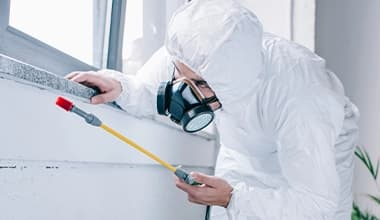
- Adulticide — A synthetic pyrethroid (we typically use products containing bifenthrin or lambda-cyhalothrin) is applied to all carpet, rugs, upholstered furniture, pet resting areas, and the perimeter of every room. This kills adults on contact and provides several weeks of residual activity.
- Insect Growth Regulator (IGR) — Products containing methoprene or pyriproxyfen are mixed in or applied separately. IGRs mimic juvenile hormones and prevent flea larvae from maturing into breeding adults. This is the component that breaks the lifecycle.
- Exterior perimeter — We treat the yard, especially shaded areas under decks, shrub borders, and anywhere pets rest outdoors, since re-infestation almost always originates outside.
Important
Vacuuming after treatment is critical — it stimulates flea pupae to hatch into the treated environment. Do not skip this step.
What You Need to Do Before We Arrive
Preparation dramatically affects how well a flea treatment works. Thoroughly vacuum all carpeted areas, hardwood floors, and furniture — this removes some eggs and larvae and stimulates pupal hatching. Wash all pet bedding in hot water. Move furniture away from walls so we can treat baseboards. Arrange for pets and all humans to be out of the home for at least 4 hours after treatment.
Pro Tip
Do not re-vacuum for at least 2 weeks after treatment. The residual insecticide in carpet fibers needs time to work on newly-hatched fleas.
What to Expect After Treatment
You will likely still see some fleas for 1–2 weeks after treatment. This is normal and expected — it's newly-hatched fleas contacting the treated surfaces and dying. If you're seeing live fleas 3+ weeks post-treatment, that usually means either the pet was not treated simultaneously (your vet handles this), re-infestation from an outdoor source is continuing, or a room or vehicle was missed in the initial treatment. We include a free re-treatment within 30 days if the infestation persists after following preparation instructions.
How to Prevent Fleas From Coming Back
Year-round flea prevention on your pets is the single most effective defense — products like Frontline, NexGard, or Bravecto prevent your pets from becoming re-infestation vectors. Outdoors, keep grass cut short, remove leaf litter, and block access points where wildlife might nest under your home. If you're in an area bordering fields or open land in the Salinas Valley, consider a quarterly exterior perimeter treatment to intercept fleas before they get inside.
Related Resources
Frequently Asked Questions
How long does professional flea treatment take to work?
Adult fleas are killed within hours of contact with treated surfaces. However, you'll likely see some flea activity for 1–2 weeks as remaining pupae hatch and contact the residual treatment. Full elimination typically takes 2–4 weeks.
Do I need to treat my pet and my home at the same time?
Yes — this is critical. If your pet is not on a flea prevention product during home treatment, they will carry fleas from outdoor sources back inside and re-infest the treated home within days. Coordinate with your veterinarian.
Can fleas live in a home without pets?
Yes. Fleas can be introduced by rodents in walls, wildlife under the home, or even on your clothing after outdoor contact. We've treated homes where the owners had no pets but had a rodent problem in the crawl space — the fleas were coming from there.
Is flea treatment safe for children and pets?
Products are dry and safe to re-enter after approximately 4 hours. We use products registered for residential use and follow all label protocols. Keep pets and children off treated surfaces until dry.
Do I need a follow-up treatment?
In most cases, a single treatment with an IGR breaks the lifecycle without a follow-up. However, for severe infestations or homes with ongoing outdoor flea pressure, a follow-up 3–4 weeks later significantly improves results.
Written by
101 Exterminators Inc.
CA Licensed Structural Pest Control · License #PR8216 · Serving Central California since 2005
The 101 Exterminators team has been treating homes and businesses across Monterey, Santa Cruz, San Benito, and Santa Clara counties since 2005. Our technicians hold California SPCB Branch 2 and Branch 3 licenses and draw on 20+ years of real-world pest management experience in Central California.