

101 Exterminators Inc.
CA Licensed Structural Pest Control · SPCB Lic. #9119
Yellow jacket pressure in Santa Cruz County peaks from August through October, when colonies reach their largest size of the year and workers turn defensive around the nest. Two species cause most of the trouble here, and they live in different places. Western yellowjackets nest in the ground, usually in an abandoned gopher or ground squirrel burrow. German yellowjackets more often move into a wall void, an attic, or a gap behind siding, which is why a house can have a serious nest with no hole anywhere in the yard. Paper wasps build the open umbrella comb under an eave and cause far less trouble. Which one you have decides whether a trap helps and whether a homeowner should go near it.
The Season, Month by Month
The arc repeats every year, and it runs later on this coast than national advice suggests. Fertilized queens leave their overwintering spots in late March and April, each one building a small paper comb alone and raising the first workers herself. Through May and June a colony is a queen and a few dozen workers, and it is quiet. Everything that makes a yellow jacket nest dangerous happens after the workers take over the feeding.
- Late March into April — Queens come out of bark crevices, woodpiles, and attic corners and start single-comb nests. One insect, no colony behind her.
- May and June — Small colonies, low defensiveness, and the easiest weeks of the year to deal with a nest you can see.
- July — Worker numbers climb into the hundreds and the colony starts guarding a wider radius around the entrance.
- August through October — Peak. Colony size tops out, foragers switch from hunting insects to hunting sugar, and workers sting over proximity rather than provocation.
- November onward — Cold nights break the colonies up in the San Lorenzo Valley and the hills first. In Live Oak, Capitola, and Aptos, where hard frost is uncommon, foragers can still be working a warm afternoon in December.
Pro Tip
A nest found in April and a nest found in September are the same colony at two very different sizes. A single wasp working a small comb under an eave in spring is the whole problem at its smallest.
Which Wasp You Actually Have
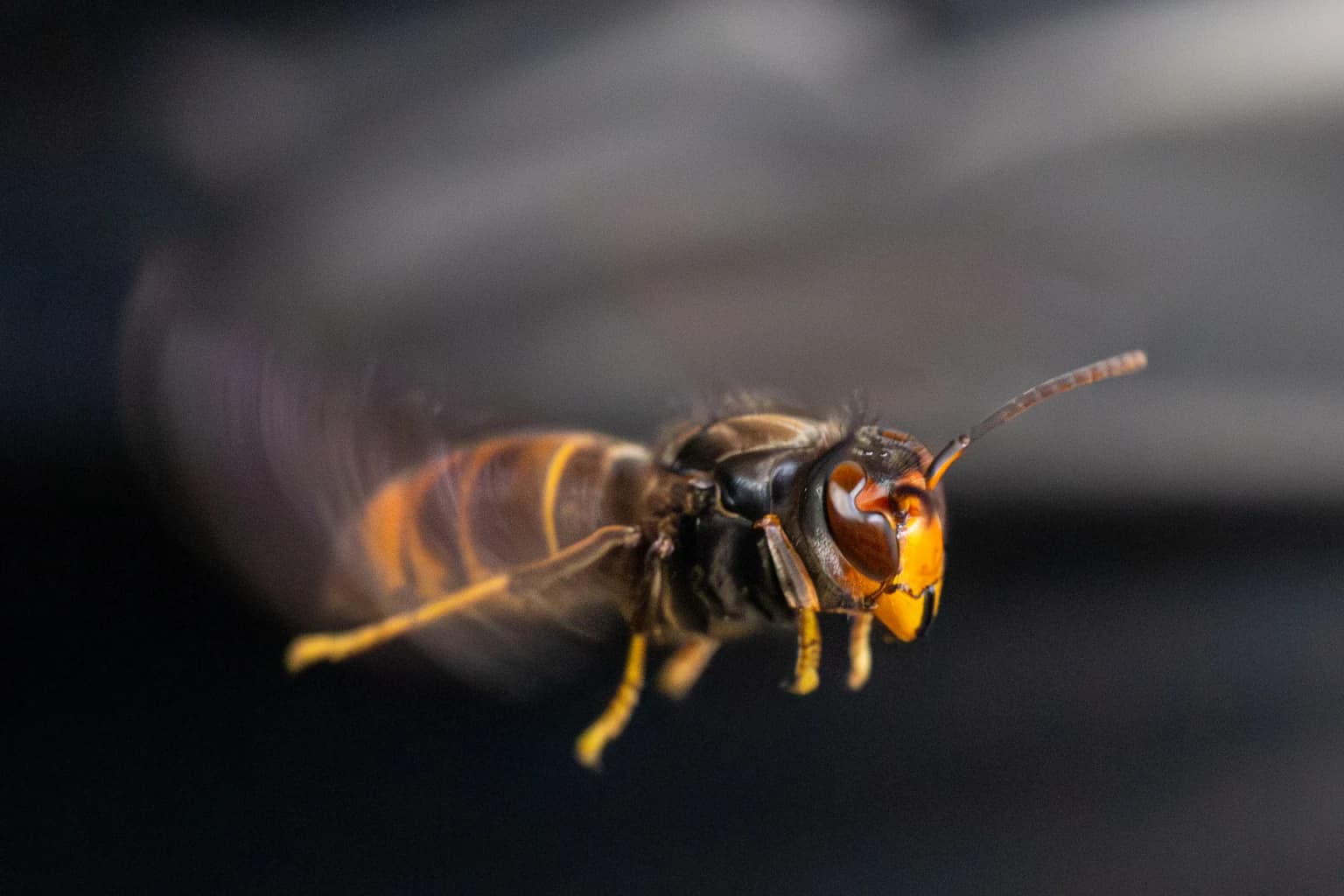
Four insects get called the same thing in this county, and the difference decides the approach. Identify the nest before you identify the wasp, because the nest is easier to read from a safe distance.
- Western yellowjacket (Vespula pensylvanica) — The ground nester, and the species behind most stinging calls here. It takes over an abandoned rodent burrow, so the entrance is a hole an inch or two across in a lawn, a bank, or a bare patch under decking, with a steady two-way stream of traffic on warm afternoons.
- German yellowjacket (Vespula germanica) — Established in California towns since the 1990s and more of a building nester than a ground nester. It works into wall voids, attics, and gaps behind siding and trim, which is why some Santa Cruz nests never show a hole in the yard.
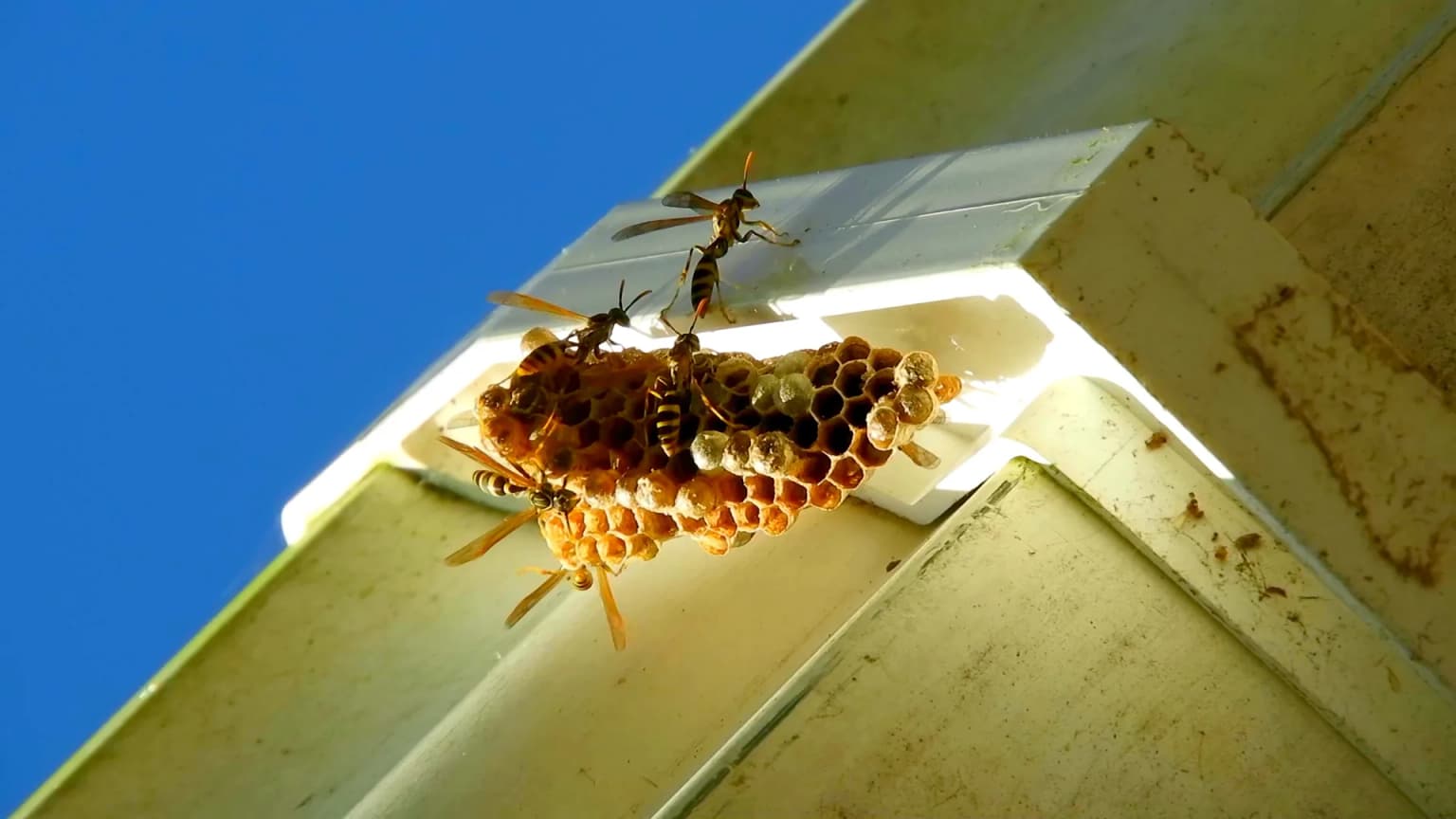
- Paper wasps (Polistes species) — The open, gray, umbrella-shaped comb hanging by a short stalk under an eave, a porch rafter, a shutter, or a grill lid. The cells are visible from below and there is no paper shell around them. Paper wasps hunt caterpillars and rarely chase anyone who is not touching the nest.
- Aerial yellowjackets (Dolichovespula species) — The gray football hanging in a tree or off a soffit, fully enclosed with one small opening near the bottom. Commonly called a hornet nest. Defensive close in, but the colony dies out in fall and the nest is never reused.
Did You Know
There is no established population of true hornets, the genus Vespa, in California. A large wasp in a Scotts Valley attic is a yellow jacket or a paper wasp in almost every case, and the treatment differs between them.
Why This County Runs Hotter Than the Rest of the Coast
Four local conditions stack up here, and together they explain why yellow jacket calls in Santa Cruz County start earlier and run later than they do over the ridge.
- Creek corridors — The San Lorenzo River, Branciforte Creek, Soquel Creek, and Zayante Creek carry shaded, damp, rodent-worked banks out of the mountains and straight into neighborhoods such as Harvey West, Seabright, and Soquel. Soft moist soil full of old burrows is what a founding queen is looking for in April.
- The marine layer — Summer fog holds soil moisture on this side of the ridge, so a ground nest does not dry out and stall the way one does in an inland August.
- Gophers and ground squirrels — Yellow jackets almost never dig their own burrow. A property with an active gopher problem manufactures nest sites every spring.
- Late fruit and outdoor food — Backyard apple, fig, and plum drop lands in September, at the same weeks the colonies switch to sugar. Add outdoor dining and open bins and a yard problem turns into a patio problem.
Did You Know
The wasps at your table in September are not defending anything. They are foraging for sugar, and the nest may be several houses away. The ones worth real caution are the ones you meet within a few steps of a hole in the ground or a gap in the siding.
Why the Trap on the Fence Is Catching Half of Them
The lure traps sold in hardware stores are baited with heptyl butyrate, which pulls in western yellowjackets and does close to nothing for German yellowjackets. That single fact explains why a trap can fill up while the wasps working the eaves carry on. Traps also catch foragers rather than colonies: they take workers out of the air near the trap and leave the queen and the brood untouched. Hung out in spring, they intercept searching queens and are worth the effort. Hung beside the patio table in September, they bring more wasps toward the patio.
Pro Tip
A lure trap that stays empty while the stinging continues is a clue rather than a dud. It points toward German yellowjackets, and toward a nest in the structure rather than in the ground.
Where Homeowner Treatment Goes Wrong
Yellow jackets are the one job in this trade where the failure mode hurts. The pattern we get called into repeats: somebody finds the ground entrance in the evening, empties an aerosol into it, and never reaches the comb, which in a mature nest sits well back from the opening and below it. The colony survives and is now agitated. Whoever walks past that entrance the next morning meets a nest already on alert at the hour foraging traffic is heaviest. Yellow jackets also sting more than once, because the sting is not barbed the way a honey bee sting is.
- A ground entrance is not the nest — The comb sits in a cavity beyond it, and product that stops at the door does not reach the brood.
- Wall voids are worse — Sealing the outside opening traps a live colony in the cavity, and the workers chew toward the nearest light and air, which is the inside of the house.
- The ladder is the second hazard — In eave and soffit work, the fall does more damage than the stings.
- A sting allergy in the household changes the math — If anyone there carries an epinephrine auto-injector, nobody in the house should be approaching the nest.
Important
A mature ground nest in September can hold thousands of workers, and a disturbance recruits them in seconds. Anyone with a known bee or wasp sting allergy should stay away from the entrance entirely.
What a Licensed Technician Does Differently
The work turns on reaching the comb rather than the opening, and on wearing protective equipment that lets a technician stay in place instead of retreating halfway through. For a ground nest that means injecting a labeled dust deep into the cavity through the entrance, so returning foragers carry it inside on their bodies through the rest of the day. For a wall void it means locating the comb, treating through a small access point, and leaving the opening usable until traffic stops rather than sealing wasps into a bedroom wall. For an eave nest it means taking the comb down after treatment so the site does not read as a good address next spring. 101 Exterminators has held SPCB Lic. #9119 since 2005 and covers Santa Cruz County from Scotts Valley to Watsonville. A free pest evaluation puts a licensed technician on the property to tell you in person what you are dealing with, with nothing issued in writing on that visit, and a written estimate follows if there is work to do.
Cutting Next Year's Pressure
The season you can change is the next one, and the work happens in March and April rather than in August. A founding queen is a single insect with no colony behind her, and the same site left alone is the thing nobody can walk past in September.
- Walk the eaves in early spring — Check eaves, porch rafters, deck framing, shutters, and the underside of patio furniture and grill lids for a small comb with one wasp on it.
- Fill the old burrows — Collapse and fill gopher and ground squirrel holes in lawns and banks before April, and keep the rodent problem itself in hand.
- Close the building gaps — Screen attic and foundation vents, repair torn soffit material, and seal the gaps behind trim and siding that a German yellowjacket queen uses to get into a void.
- Pick up the fruit — Windfall apples, figs, and plums on the ground in late summer feed a colony through the weeks it is hungriest.
- Lid the bins — Tight lids on garbage and green waste, recycling rinsed, and outdoor pet bowls brought in overnight.
Related Resources
Frequently Asked Questions
When is yellow jacket season worst in Santa Cruz County?
August through October. Colonies reach their largest size of the year in late summer, and workers that spent spring hunting insects for the brood switch to hunting sugar, which puts them at picnic tables, garbage bins, and fallen fruit. Cold nights thin the colonies in the San Lorenzo Valley and the hills first. Along the coast in Live Oak, Capitola, and Aptos, where hard frost is uncommon, foragers can still be out on a warm afternoon in December. The nest itself is never reused the following year.
How do I tell a yellow jacket from a paper wasp?
Read the nest before you read the insect. A paper wasp comb hangs from a short stalk under an eave with the cells open to the air and no shell around them. A yellow jacket nest is enclosed: underground behind a hole in the soil, hidden inside a wall or attic, or wrapped in a gray paper envelope in a tree. In the air, a yellow jacket flies with its legs tucked up, while a paper wasp lets its long back legs hang below it.
Do the wasp traps sold at hardware stores work?
They work on one of the two common species here. The standard lure is heptyl butyrate, which attracts western yellowjackets and largely ignores German yellowjackets, so a trap that stays empty while the stinging continues points at a nest in a structure rather than in the ground. Traps also catch foragers rather than colonies. Hung out in spring they take searching queens out of circulation, which is worth doing. Hung by the patio in September they draw more wasps toward the patio.
Can I treat a yellow jacket nest myself?
A small paper wasp comb under a rarely used eave is within reach of a careful homeowner working at dusk. A ground nest, a nest inside a wall or attic, or any nest you cannot see the whole of is a different situation, because the comb sits beyond the opening and a partial treatment leaves an agitated colony in place until morning. Anyone in the household who carries an epinephrine auto-injector should stay away from all of it. Yellow jackets sting repeatedly, since their sting is not barbed like a honey bee's.
How do I find an underground yellow jacket nest?
Watch the traffic from fifteen or twenty feet away on a warm afternoon, when foraging is heaviest. Flight lines converge on one point, usually a hole one to two inches across in a lawn, a bank, or a bare patch under decking or a walkway. Workers return to the same entrance again and again. Mark it with something visible from a distance, a flag or a stake set well back, so nobody has to walk up to it a second time, then leave it alone until it is treated.
There is a wasp nest inside my wall. Can I seal the hole?
No, and this is the mistake that puts wasps inside the living space. Sealing the outside entrance traps a live colony in the void, and the workers chew toward the nearest light and air, which is usually the interior wall or the ceiling below it. The opening stays open until the colony is dead. Sealing it, along with screening the vents and closing the gaps behind trim, is the work that comes afterward.
Written by
101 Exterminators Inc.
CA Licensed Structural Pest Control · SPCB Lic. #9119 · Serving Central California since 2005
The 101 Exterminators team has been treating homes and businesses across Monterey, Santa Cruz, San Benito, and Santa Clara counties since 2005. Our technicians hold California SPCB Branch 2 and Branch 3 licenses and draw on 20+ years of real-world pest management experience in Central California.