

101 Exterminators Inc.
CA Licensed Structural Pest Control · SPCB Lic. #9119
Roof rats (Rattus rattus) are arboreal rodents — unlike Norway rats that burrow in the ground, roof rats live in trees and enter homes from above. Santa Cruz has among the highest roof rat pressure of any California coastal city because the city's mature redwood and eucalyptus tree canopy provides continuous elevated travel routes that connect trees to rooflines, and the city's older housing stock (concentrated in the 1920s–1950s bungalows of the Westside, Seabright, and Live Oak neighborhoods) has attic gaps, soffit voids, and deteriorated fascia boards that roof rats enter through openings as small as a half-dollar coin.
Why Roof Rats Thrive in Santa Cruz Specifically
Roof rats are native to tropical Asia and were introduced globally through maritime trade routes. They settled into coastal California port cities — San Francisco, Santa Cruz, Monterey — centuries before suburban California existed, which is why coastal cities have endemic roof rat populations that inland areas (Los Angeles basin excepted) largely don't. Santa Cruz has been a roof rat city since the 19th century. What distinguishes Santa Cruz from other coastal California cities is the density and maturity of its tree canopy. The redwood groves of the Westside neighborhoods (near UCSC and the Natural Bridges area), the eucalyptus rows throughout Seabright, Live Oak, and Capitola, and the mature Monterey pine plantings in older residential neighborhoods create an interconnected overhead habitat that roof rats exploit as both a travel corridor and a nesting environment. A roof rat living in a large coastal redwood 60 feet from a house can reach that house's roofline via branch contacts with adjacent trees without ever touching the ground. The combination of old canopy and old housing stock is the defining factor. A new construction home in Scotts Valley with a 10-year-old oak in the backyard has minimal roof rat risk even if the surrounding environment has rats. A 1940s bungalow in the Seabright neighborhood with a 70-year-old eucalyptus whose branches reach the roof is an almost certain annual problem.
How Roof Rats Enter Homes: Entry Points and Tree Bridges
Understanding how roof rats get inside a home is essential for choosing the right combination of control methods. They almost never enter through doors or ground-level gaps — they enter from the roof, eaves, and upper wall penetrations. Tree bridges are the primary access route. Any tree branch that contacts or comes within 18 inches of a roofline, eave, or second-story window is a potential entry bridge. Roof rats can jump horizontally approximately 4 feet from a branch, so a branch passing even 3–4 feet above the roofline is a usable access point — they drop down from the branch to the roof surface. Once on the roof, they move along the ridgeline or eaves exploring for openings. Common structural entry points: open soffit vents (the circular or rectangular vents along the underside of the roof overhang), gaps at the junction of the roofline and gable ends, deteriorated fascia boards with gaps where the fascia meets the soffit, gaps around utility penetrations (gas lines, electrical conduit, plumbing vents) through the roof decking or upper walls, unsealed attic access hatches, and open chimney tops. In older Santa Cruz homes, the most common entry we find is a rotted or damaged section of soffit wood along the north-facing eave — where fog and moisture deteriorate wood fastest. The gap may be only a quarter-inch wide but is sufficient for a juvenile rat or a motivated adult.
Did You Know
A roof rat can squeeze through any gap a half-inch or larger. An adult Norway rat needs about an inch. If you can fit your index finger into a gap at the roofline, a roof rat can enter through it.
Signs of Roof Rat Infestation vs Norway Rat vs Mice
Correct identification determines the treatment strategy. Roof rats, Norway rats, and mice create overlapping signs but with key differences: Roof rats: Scratching and running sounds from the attic or ceiling — primarily at night, between approximately 11pm and 3am when they are most active. Droppings are capsule-shaped, pointed at both ends, approximately 1/2 inch long. Nesting materials (shredded insulation, paper, plant fibers) found in the upper attic insulation layer. Gnaw marks on wiring, especially in the attic. Occasionally found drowned in swimming pools or spas (they are poor swimmers compared to Norway rats). Fruit or citrus found partially eaten with small incisor marks. Norway rats: Sounds from wall voids at ground level, under floors, or near crawl space. Burrow entrance holes 2–3 inches in diameter near the foundation exterior. Rub marks (greasy smears from their oily fur) along baseboards. Droppings are larger — capsule-shaped but blunt at both ends, 3/4 inch long. Norway rats are less common in the elevated, arboreal Santa Cruz neighborhoods and more common in the flatland areas near the harbor and industrial zones. Mice: Much smaller droppings (1/4 inch, pointed). More active in daytime as well as night. Typically found in kitchen areas and pantries, not primarily in attics. Nests constructed of fine shredded material in cabinets and wall voids.
Health and Fire Risks from Roof Rats in Attics
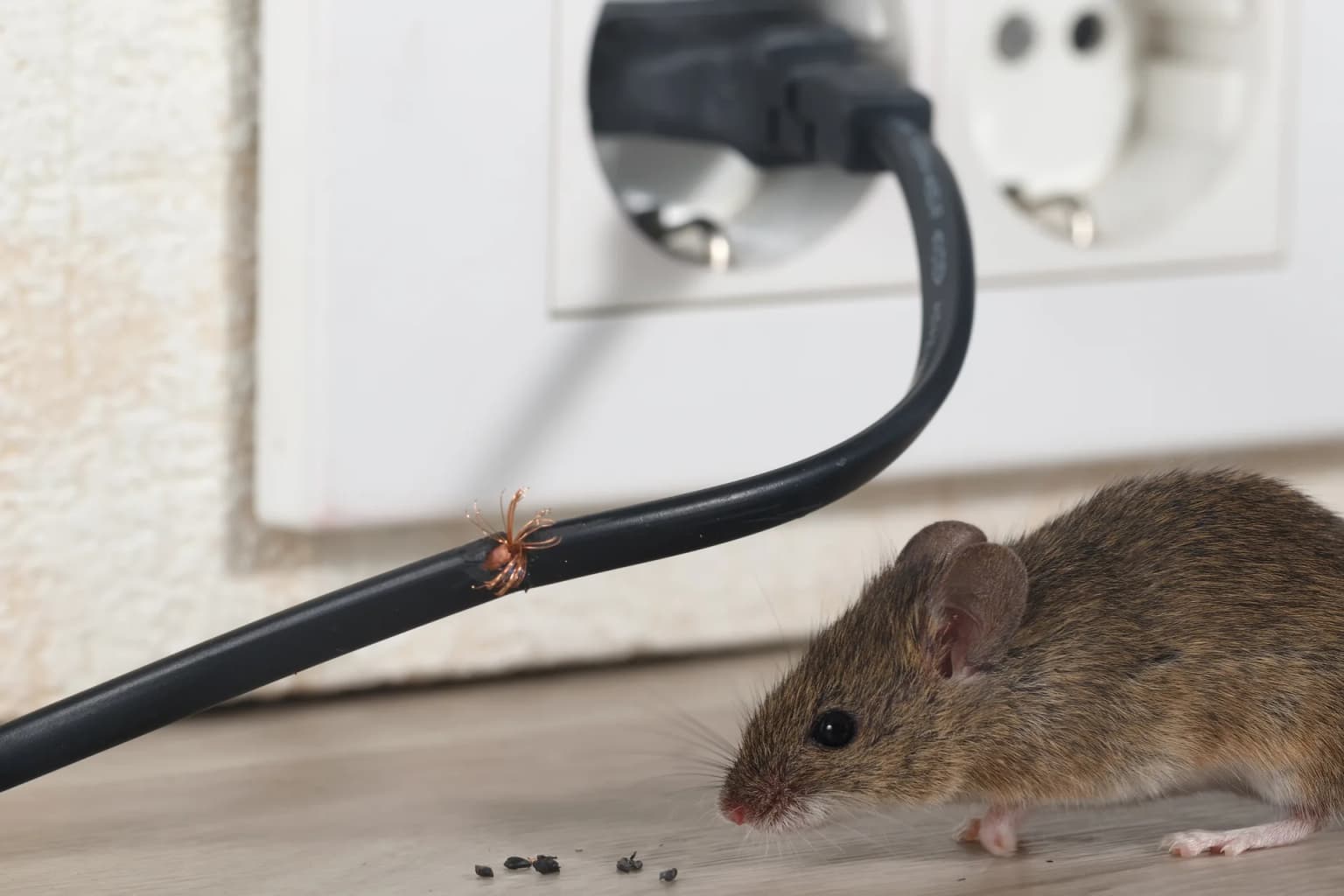
Roof rats in attics create two serious risk categories that justify prompt treatment even when the infestation seems minor. Electrical fire risk: Rats gnaw continuously — their incisors grow constantly and must be worn down. Attic wiring is an attractive gnawing substrate. Roof rats chew through wire insulation to access the wire itself, creating exposed conductors in enclosed spaces. Electrical fires traced to rodent gnawing in attics are documented in insurance records throughout California coastal counties. A single rat chewing through a 14-gauge wire in insulation that has settled over decades can create a smoldering ignition source that is invisible until the fire is established. This is not a theoretical risk — it is a documented cause of structure fires in Santa Cruz County. Health risk: Roof rats are the primary reservoir of leptospirosis in California coastal areas. Their urine, contaminating attic insulation, can cause human infection if disturbed during attic access for HVAC work, insulation replacement, or holiday decoration retrieval. Dried rat urine becomes airborne when insulation is disturbed without respiratory protection. Roof rats also carry fleas that are vectors for murine typhus — cases of murine typhus have been documented in Santa Cruz County. Hantavirus, while primarily associated with deer mice, can be a concern with any rodent excreta in enclosed spaces. The combination of fire and health risk means that a roof rat infestation is not a "deal with it next month" situation. An attic population of 5–10 rats actively gnawing wiring over several months represents a genuine structural risk.
Important
If you need to access your attic and you know or suspect roof rats are present, wear an N95 respirator and disposable gloves. Do not sweep or vacuum rat droppings without respiratory protection — disturbed dried feces and urine create aerosolized particles that can cause respiratory infection.
The Three-Part Treatment Approach: Trapping, Exclusion, and Canopy Management
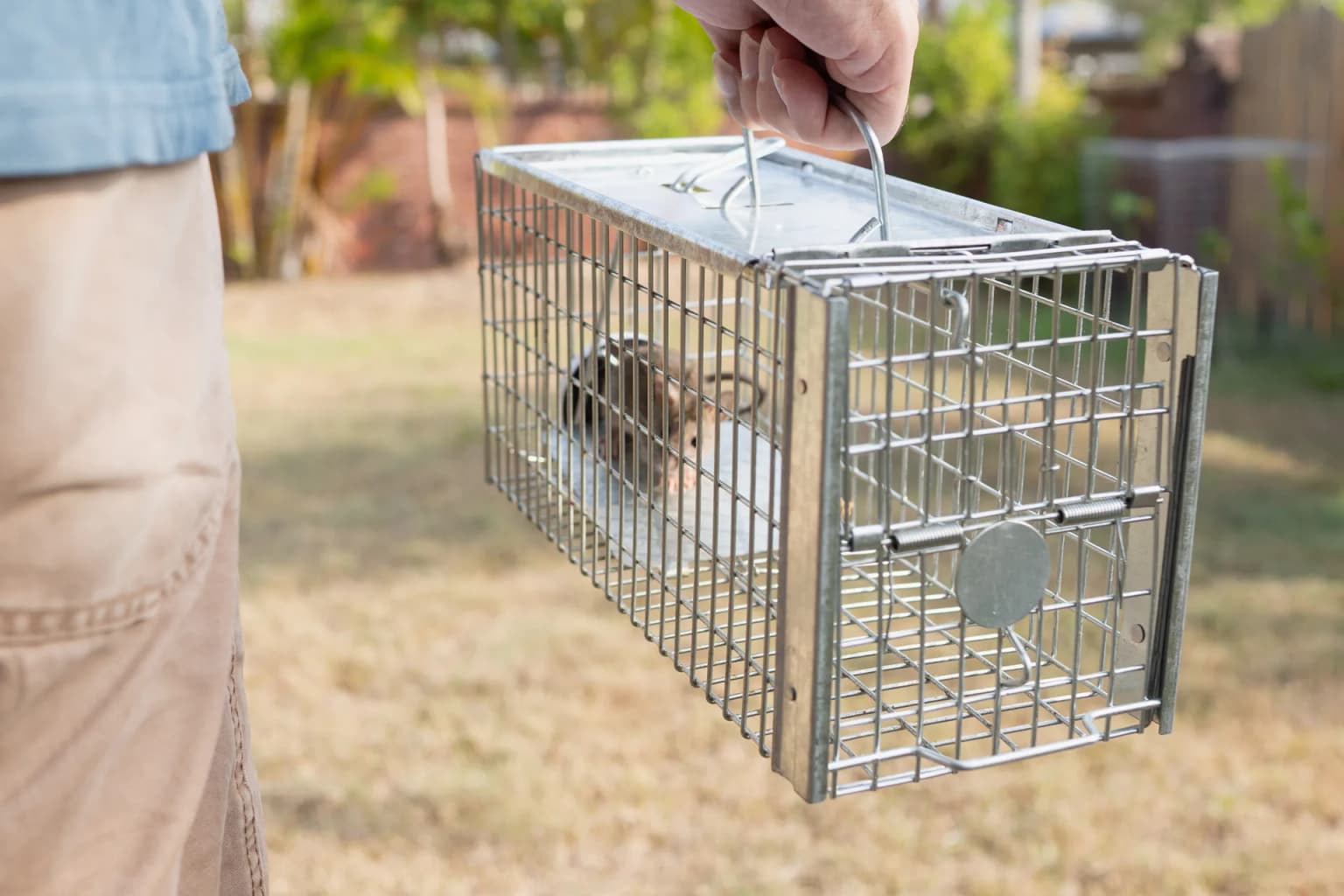
Effective roof rat control in Santa Cruz requires three simultaneous components. Addressing only one or two produces temporary results at best. Trapping: Snap traps are the most reliable and fastest-acting tool for reducing the existing population. For roof rats, traps are placed in the attic along their travel routes (parallel to the attic framing, against walls, near entry points) and in the exterior along fence lines and at the base of any tree with canopy access to the roof. Bait with peanut butter or a small piece of dried fruit (rats have a dietary preference for plant material). Traps should be checked every 24–48 hours and reset until activity ceases. We do not use rodenticides (rat poison) as a primary treatment tool because secondary poisoning of raptors, owls, and other predators is a documented problem in Santa Cruz County's wildlife-rich neighborhoods, and because dead rats in wall voids cause odor problems. Exclusion: This is the permanent solution — sealing every entry point so that new rats cannot enter the structure after the existing population is eliminated. Exclusion work on a typical Santa Cruz bungalow includes: replacing deteriorated soffit wood and sealing the soffit-fascia junction with galvanized hardware cloth, installing mesh over all soffit vents, sealing utility penetrations through the roof with copper mesh and hydraulic cement, installing a chimney cap if not present, and checking the attic hatch seal. This work is physical and often requires a roofer or carpenter for wood repair, in addition to pest control for the mesh and sealing work. We coordinate with contractors for combined exclusion projects when needed. Canopy management: Trim all tree branches to maintain a minimum 4-foot clearance from any part of the structure. For redwoods and eucalyptus — fast-growing species — this typically means annual trimming. Consider whether trees within 20 feet of the structure warrant removal if branch clearance cannot be maintained cost-effectively. This is the component most homeowners resist, but without it, re-entry occurs within 3–6 months of any exclusion work.
What Homeowners Can Do About Adjacent Trees
Tree management for roof rat control is a nuanced topic in Santa Cruz, where mature redwoods have significant cultural value and where removal may be subject to city tree ordinances. The goal is not tree removal — it is branch clearance from the structure. For most residential situations, the practical target is maintaining 4 feet of clearance between any branch and any part of the roof, eave, or upper wall. This is achievable through directional pruning of the limbs growing toward the structure. A certified arborist (ISA certification) can remove specific limbs that pose rat-access risk while preserving the overall canopy structure and tree health. For UCSC-area Westside properties or Natural Bridges neighborhood homes under mature redwoods, an arborist with specific redwood pruning experience is recommended. For eucalyptus trees — common in Seabright, Live Oak, and Aptos — branch clearance is a less effective long-term strategy because eucalyptus grows rapidly and droops under the weight of foliage. Annual trimming may be necessary. For properties where a eucalyptus's canopy makes rat access inevitable regardless of pruning, a roof-level exclusion that is maintained and inspected annually is more reliable than continuous trimming. Note that Santa Cruz city has a Heritage Tree ordinance protecting trees above a certain trunk diameter — check with the city's Parks & Recreation department before removing any large tree, particularly redwoods. Removal without a permit can result in substantial fines.
Pro Tip
If your HOA or neighbor's tree is the source of roof-level branch access to your home, document the branch contact with photos and discuss with your neighbor before escalating. Many neighbors are cooperative when the specific rat-access pathway is demonstrated — especially if you pay for half the trim.
Insulation Replacement After Roof Rat Infestation
After a roof rat infestation is eliminated and exclusion is complete, attic insulation assessment is an important final step. Roof rats use attic insulation extensively for nesting — they tunnel through blown-in fiberglass or cellulose, create void chambers where they nest and defecate, and in heavy infestations can compress and contaminate large sections of insulation to the point where its R-value is meaningfully reduced. Signs that insulation replacement is warranted: visible brown staining (urine) on insulation in multiple locations, extensive tunneling and void formation visible through the attic hatch, heavy fecal accumulation in sections of the attic, or a persistent ammonia odor even after the population is eliminated. In Santa Cruz's older housing stock, we commonly find blown-in cellulose insulation that is 40–60 years old, already at reduced R-value from settling, and additionally degraded by rat activity — in these cases, insulation removal and reinstallation delivers both a hygiene benefit and a measurable energy efficiency improvement. Insulation removal in a rat-contaminated attic requires protective equipment and proper disposal — it is not a DIY project. We provide complete insulation removal and reinstallation services for attics in Santa Cruz County, coordinated as part of a comprehensive rodent remediation that includes population control, exclusion, and attic restoration.
Frequently Asked Questions
Do roof rats actually live in redwood trees?
Yes — roof rats are arboreal by nature and use dense canopy trees (redwoods, eucalyptus, palms, Monterey pine) as both travel corridors and nesting sites. In Santa Cruz, roof rats nest in the canopy of large redwoods and use branch contacts to move between trees and adjacent structures. They are comfortable at elevation in a way that Norway rats (ground-dwelling burrowers) are not. A mature redwood within 20 feet of your roofline is likely a rat highway if the branches approach the structure.
How do I know if I have roof rats vs mice in my attic?
Roof rat droppings are about 1/2 inch long, capsule-shaped with pointed ends — significantly larger than mouse droppings (1/4 inch, rice-grain sized). Sounds from roof rats are louder, with an audible thumping or running sound across the attic ceiling. Mice tend to scratch and rustle in wall voids and kitchen areas, while roof rats are primarily attic-dwellers in Santa Cruz homes. If you see gnaw marks on wiring or large nesting voids in attic insulation, that points strongly to roof rats.
Will trimming trees keep roof rats away from my house?
Tree trimming to maintain 4-foot clearance from the structure is an important part of the solution, but not sufficient on its own. Rats can still access the property on the ground and climb the structure directly (they can climb stucco, brick, and downspouts). Trimming should be combined with structural exclusion — sealing all entry points at the soffit, fascia, vents, and roof penetrations. Together, these two steps are highly effective. Trimming alone without exclusion slows re-entry but doesn't prevent it.
How long does roof rat exclusion take?
A professional exclusion inspection and quote for a typical Santa Cruz bungalow takes 45–60 minutes. The exclusion work itself varies with the condition of the structure — for a home with relatively intact soffits and a small number of entry points, the sealing work takes 3–5 hours. For older homes with extensive soffit damage, rotted fascia, and multiple utility penetrations, the work may require a full day and potentially coordination with a carpenter for wood repair before sealing. We provide a written scope and cost before starting any work.
Written by
101 Exterminators Inc.
CA Licensed Structural Pest Control · SPCB Lic. #9119 · Serving Central California since 2005
The 101 Exterminators team has been treating homes and businesses across Monterey, Santa Cruz, San Benito, and Santa Clara counties since 2005. Our technicians hold California SPCB Branch 2 and Branch 3 licenses and draw on 20+ years of real-world pest management experience in Central California.