Published by
101 Exterminators Inc.
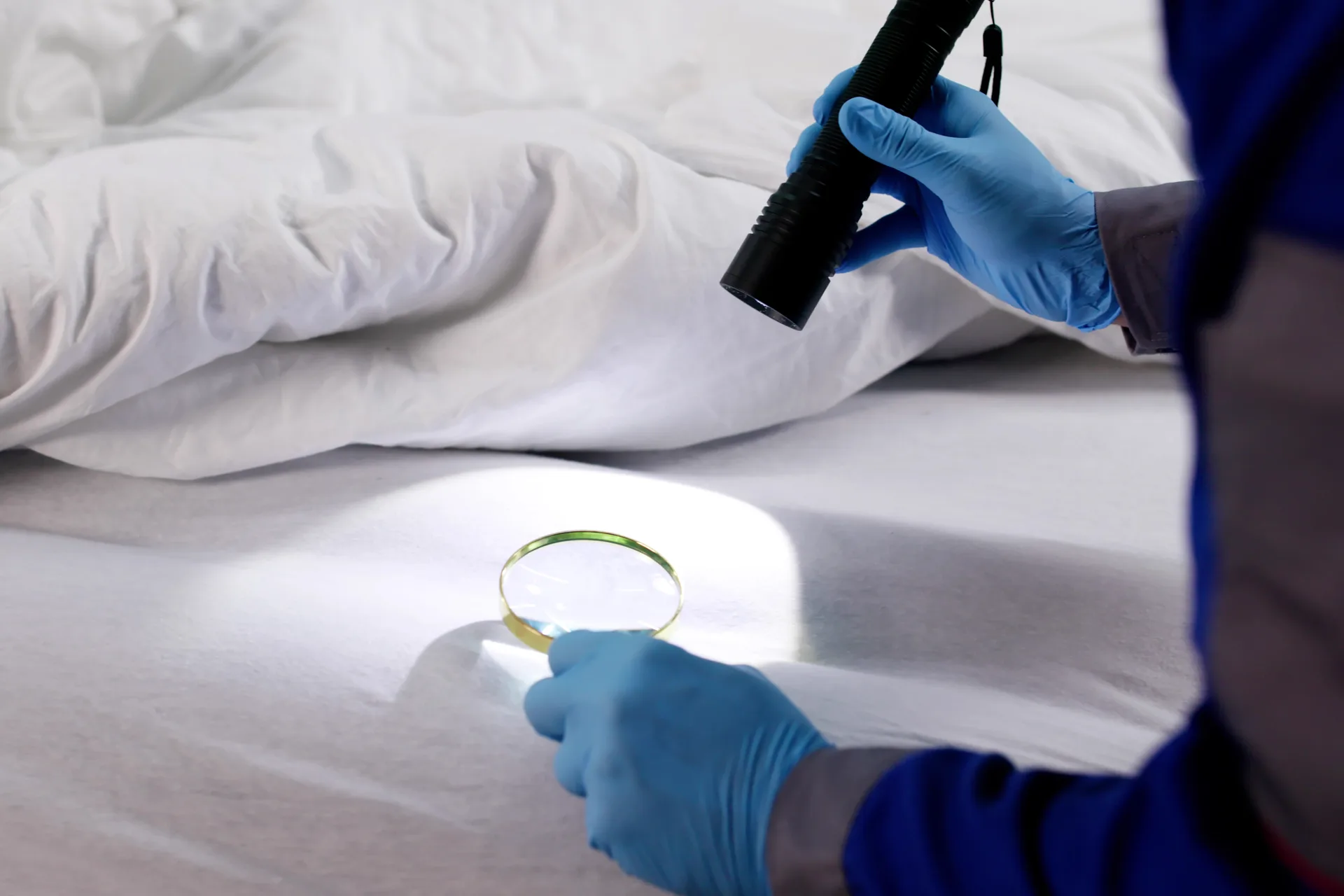
A drop in bed bug trap counts is good news. It does not, by itself, prove that every bug is gone. Interceptors sample bugs moving to or from a bed, while inspections look for signs in seams, frames, furniture, and nearby rooms. Treatment can reduce a population sharply and still leave surviving insects. Ask what was measured, for how long, and what findings would trigger another visit.
Know what an interceptor count measures
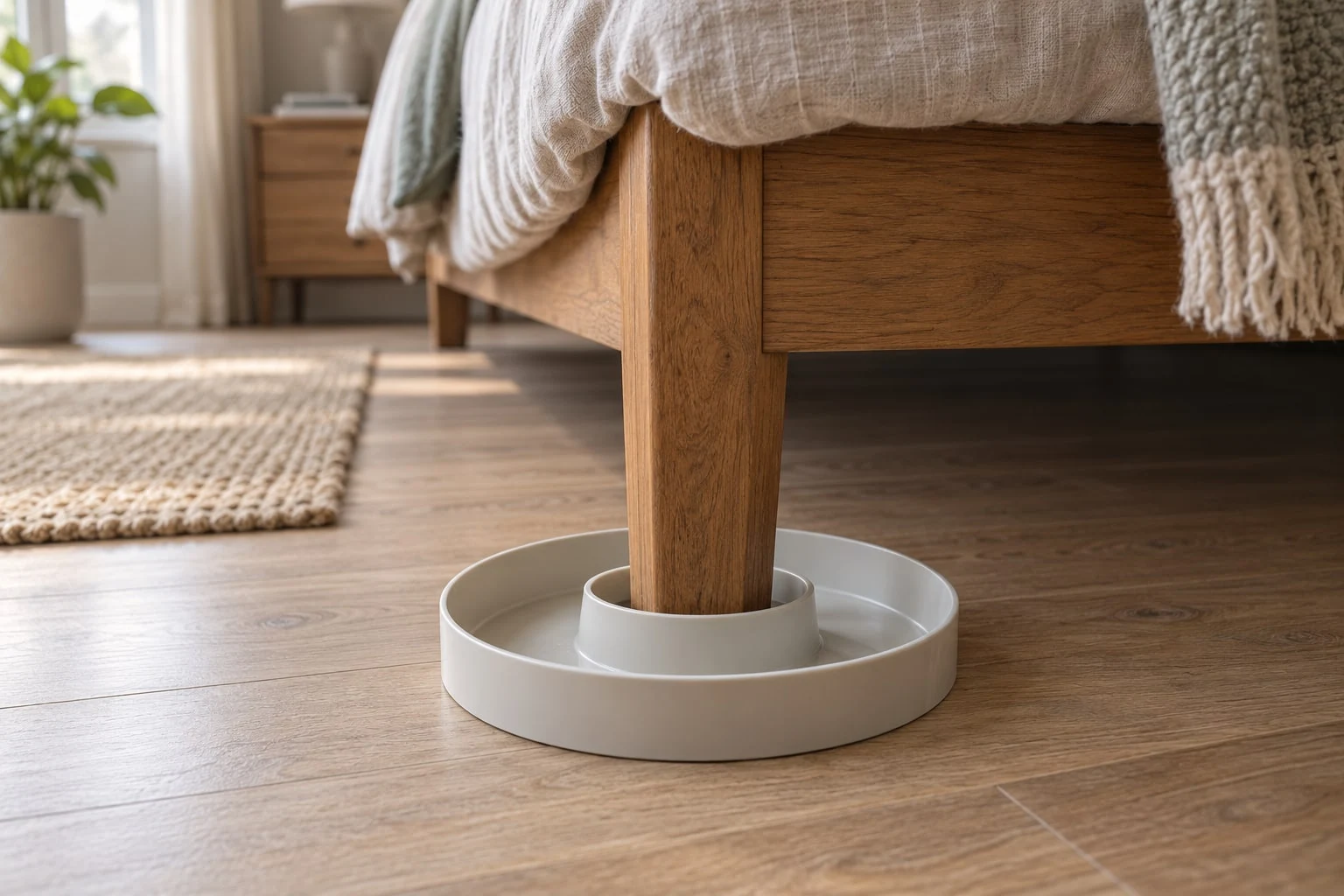
A passive interceptor is placed beneath a suitable bed or furniture leg. Bugs crossing its walls can become trapped, so repeat checks give a count at that location. A zero after one night does not survey the whole room. The bed must be set up so bugs cannot bypass the device by using bedding touching the floor, a wall, or a nearby object. Record the date, device location, and count so future checks use the same method. UC IPM describes monitors as tools for detection and ongoing assessment, alongside visual inspection.
Read the bed bug preparation resourceSources: UC IPM bed bug guidance
What the apartment interceptor trial found
Cooper, Wang, and Singh studied apartments with low bed bug counts. At week eight, counts were lower where traps stayed in place than where they were used on and off. By week sixteen, half the homes with steady trapping met the study’s clearance rule. A second test used several methods, so its result cannot be credited to traps alone. The homes began with low counts. The study backs ongoing checks, but does not show that traps alone cure a heavy infestation.
Sources: Cooper et al. (2016)
Large reductions can leave live bugs
In a separate New Jersey program, nine homes received steam, bagging or laundry steps, traps, targeted products, and repeat visits. Residents also got advice. Singh, Wang, and Cooper found that counts fell by 96.8% on average, yet only three homes met the study’s clearance rule. All four homes that began with more than 300 bugs still had activity after five and a half to six and a half months. This small study had no control group. It shows why a large drop is not proof that all bugs are gone.
Sources: Singh et al. (2013)
Use the same checks over time
Keep bed placement and monitor positions consistent, inspect the same seams and frame joints, and save photos of suspicious signs. A count rising at one leg may reflect bugs remaining nearby, a new arrival, or a change in device placement. A drop after treatment should prompt continued checks under the written plan. Ask the technician to identify any captured insect before adding it to the bed bug record. This matters in shared housing, where work in an adjoining unit may affect what appears in yours.
Sources: UC IPM bed bug guidance
Questions before calling a room clear
Ask what evidence started the case, the starting counts or visual findings, the method used at each follow-up, the last date a live bug was found, and which spaces were not inspected. Ask what the written service scope defines as completion and what happens if another specimen is found. There is no universal number of empty trap days that certifies a room. A property manager can use the same record to make a better decision about occupancy and communication without promising that another arrival is impossible.
See the rental-host response guideA simple check sheet makes the trend readable
Give each bed leg device a fixed name, such as left headboard or right foot. On each planned check, write down the date, the number and type of insects, whether the device was clean and in place, and whether bedding or furniture touched a wall or floor. Add a photo of any insect you cannot identify. Keep visual inspection notes on a separate line: seams checked, furniture moved, and places that could not be reached. A zero from a cup that was knocked aside is missing data, not evidence of clearance. If a room is vacant, note that too, because the pattern of bug movement may differ without a sleeping host.
Sources: UC IPM bed bug guidance
Read a mixed result without forcing an answer
Suppose the bed-leg count falls but a live bug appears behind a nightstand. The count still shows fewer bugs crossed those legs, while the specimen shows activity remains in the room. The next step is to preserve the specimen and ask which nearby hiding places and adjoining rooms need inspection. If every device stays empty but a guest reports bites, do not diagnose bed bugs from the skin reaction alone; ask for an insect or other physical evidence. In a shared building, tell the manager which rooms were inspected and which were not. A written follow-up can then address the actual uncertainty instead of treating all sightings as the same problem.
Related Resources
Frequently Asked Questions
Does a zero in an interceptor mean the room is clear?
No. It means no bug was caught by that device during that check. Interpret it with placement, repeat monitoring, visual inspection, and the written treatment plan.
Can interceptors replace treatment?
They may help detect and reduce low-level activity, but the cited apartment study does not establish them as a stand-alone cure for heavy infestations.
What should I save after treatment?
Keep dated device counts, specimen photos or identifications, inspection findings, treated areas, access limits, and follow-up instructions.
Sources
- Cooper R, Wang C, Singh N. Effects of Various Interventions, Including Mass Trapping with Passive Pitfall Traps, on Low-Level Bed Bug Populations in Apartments. Journal of Economic Entomology. 2016;109(2):762–769. doi:10.1093/jee/tov337. · Journal of Economic Entomology
- Singh N, Wang C, Cooper R. Effectiveness of a Reduced-Risk Insecticide Based Bed Bug Management Program in Low-Income Housing. Insects. 2013;4(4):731–742. doi:10.3390/insects4040731. · Insects
- Kells SA, Goblirsch MJ. Temperature and Time Requirements for Controlling Bed Bugs under Commercial Heat Treatment Conditions. Insects. 2011;2(3):412–422. doi:10.3390/insects2030412. · Insects
- Bed Bugs: Pest Notes, identification and management. · University of California Statewide Integrated Pest Management Program
Publisher
101 Exterminators Inc.
Based in Salinas, we serve Monterey, Santa Cruz, San Benito, Santa Clara, San Mateo, San Francisco, and Alameda counties. This article offers general guidance; an inspection is needed for property-specific findings.
About the company