
Pest Control — Carmel-by-the-Sea, CA
Carmel Pest Control — Protecting Cottage Character
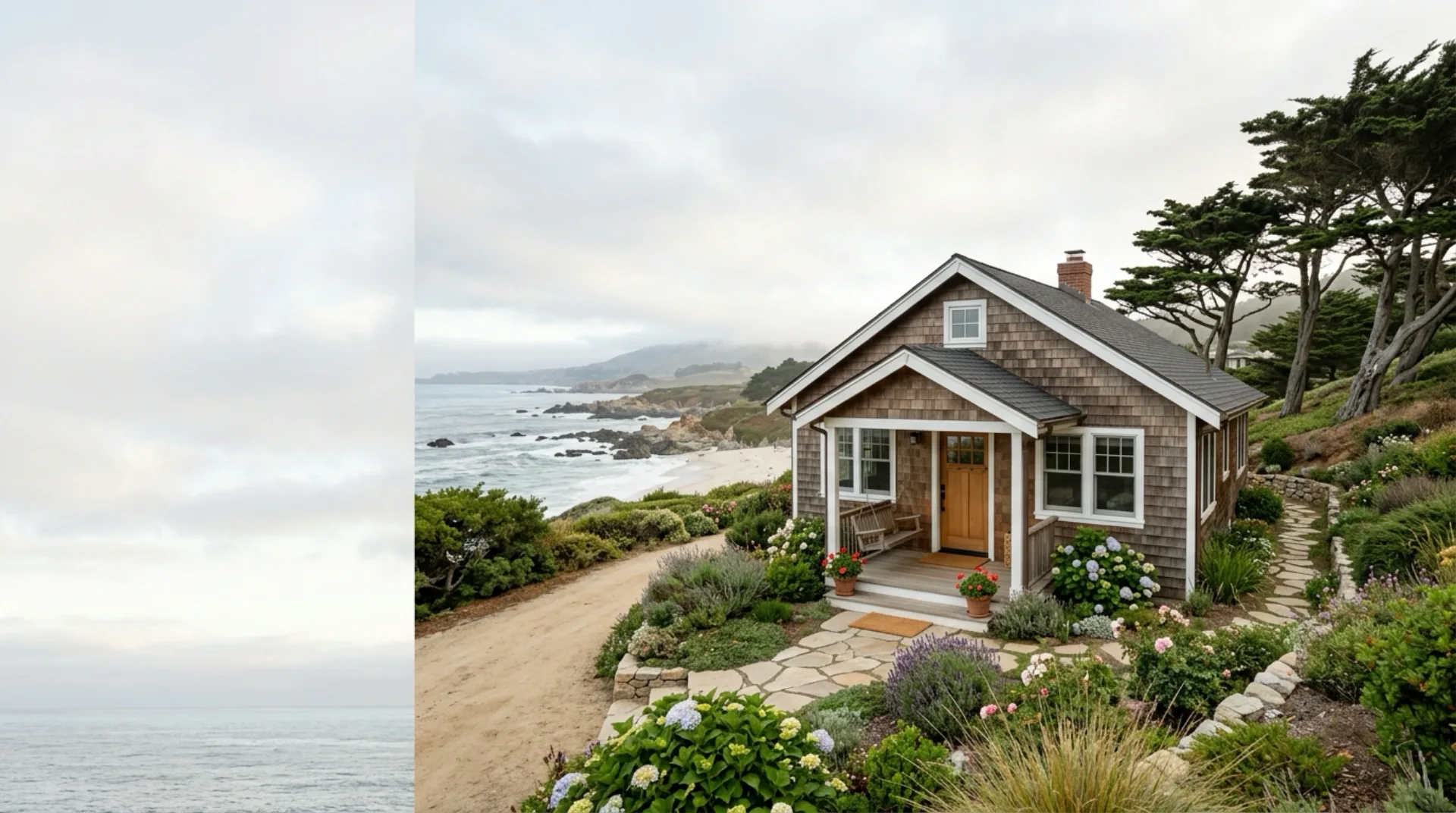
Carmel-by-the-Sea has no residential street numbers. There is no mail delivery to homes here, addresses are given as corners, and houses go by name, which means that scheduling an inspection in this city starts with a conversation no other town in our service area requires. That eccentricity runs all the way through the building stock. Hundreds of cottages went up between the 1910s and the 1940s in stone, stucco, and wood frame, many of them built by hand and by eye rather than to a drawn plan, including the storybook cottages Hugh Comstock started putting up in the 1920s. Irregular framing, original redwood and fir, hand-plastered walls, a pine canopy overhead, and fog that never really lets the wood dry out. Every one of those is a charm on a postcard and a complication on an inspection.
Local Intelligence
Understanding Carmel-by-the-Sea
Effective pest control begins with understanding the specific conditions that drive pest activity in your area. Here is what shapes the pest landscape in Carmel-by-the-Sea.
Climate & Weather
Carmel receives the same persistent marine influence as Pacific Grove — summer temperatures averaging 58–64°F with frequent fog. The Carmel Valley fog belt creates microclimatic variation even within the city: properties near the shore and in the village are foggier and cooler than those up the hill toward Mission Trail. Annual rainfall is 18 inches, and the Carmel River at the south edge of the city maintains year-round soil moisture in adjacent properties. Pest activity is consistent year-round with no meaningful winter suppression.
Housing Stock
Carmel has one of the most distinctive housing stocks in California — hundreds of custom-built cottages from the 1910s–1940s constructed with significant artistic variation, often using irregular structural framing, original redwood and fir, hand-plastered walls, and custom woodwork. These structures are architecturally significant but structurally complex: drywood termite galleries can extend through irregular framing in ways that standard inspection techniques may miss without thorough probing. The unique architecture also makes some conventional treatment approaches impractical without expert planning.
Geography & Landscape
Carmel sits on the south slope of the Monterey Peninsula, with Carmel River State Beach below it to the south and the Del Monte Forest and Point Lobos nearby. The lower Carmel River corridor holds riparian rodent populations through the year. The defining feature for pest work, though, is the canopy: Monterey pine and cypress stand over the village so continuously that the roofline of nearly every home is within reach of a branch. That is the roof rat highway, and Carmel is the one city in our area where you cannot simply prune your way out of it. The urban forest is protected by ordinance, removal requires a permit from the city forester, and significant pruning is not a homeowner's call to make alone. Any exclusion plan written for a Carmel property has to assume the canopy stays and do its work on the building instead.
Pest Pressure
Drywood termites are the primary structural pest concern in Carmel's cottage architecture — original wood framing from the 1910s–1940s has had decades to accumulate colony activity. Roof rats are endemic throughout the village, exploiting the pine canopy that is a defining feature of Carmel's character but impossible to remove from around private homes. Silverfish are persistent due to the coastal humidity. German cockroaches occasionally appear in the restaurant district along Ocean Avenue.
Most Active Species
Priority Pests in Carmel-by-the-Sea
These are the pests we see most frequently — and treat most effectively — in Carmel-by-the-Sea. Each one reflects the specific environmental conditions of this area.
CA
Licensed Structural Pest Control
A+
BBB Rating
7
Counties Covered
451
Google Reviews
Local Questions
Carmel-by-the-Sea Pest Control FAQs
Is termite fumigation safe for a historic Carmel cottage?
The gas itself is not the risk people expect it to be. Sulfuryl fluoride penetrates the wood, kills what is inside it, and dissipates during aeration, leaving no residue on wood, plaster, stone, or finishes. For a Carmel cottage with drywood activity spread through original framing, it is often the only method that reaches every gallery at once without opening up walls that were hand-plastered a century ago. The real Carmel questions are about the site rather than the chemistry. Tenting needs clearance, and these lots are small with protected trees standing over them, so we look at the canopy and the setbacks before we recommend it. Preparation is the same as anywhere: food bagged or removed, plants and pets out. Where the structure or the trees rule tenting out, localized treatment or heat can be the better answer, and we say so.
The pine trees around my Carmel home are beautiful — can I stop roof rats without removing them?
Yes, and in Carmel that is not really optional anyway. The city protects its urban forest: removing a tree takes a permit from the city forester, and meaningful pruning is reviewed rather than left to the owner, so any plan that depends on cutting the canopy back is a plan that stalls. The work goes into the building instead. We seal the structure at every point a rat can use, and the list on a 1920s cottage is long: gaps where irregular roof planes meet, attic and foundation vents with corroded screen, spaces behind fascia, and the openings around old utility runs. Clearance from branch to roofline helps where you can lawfully get it, and it is worth asking the city rather than assuming. Beyond that, interior trapping and exterior stations hold down the population that will always be living overhead. The goal is that the rats stay in the pines and lose their routes indoors.
My Carmel house has no street number. How do you find it for an inspection?
The same way the rest of the city does, by corner and by name. Carmel has no residential mail delivery and no house numbers, so when you book with us, give the cross streets and which quadrant of the intersection the house sits on, plus the house name or a landmark on the lot if it has one. Anything that distinguishes it from its neighbors helps, since the cottages on a Carmel block can look alike from the street and the numbering that would settle it does not exist. If the property is in a trust or managed for an owner who lives elsewhere, tell us who holds the keys and how the gate opens. Getting that sorted before the visit is what keeps a Carmel appointment from turning into a driving tour.
Nearby Service Areas
Areas We Serve Near Here
Serving Carmel-by-the-Sea
Schedule Service in Carmel-by-the-Sea
New customers get 10% off their first service. For a sale or refinance, request a separate paid WDO inspection.