Published by
101 Exterminators Inc.
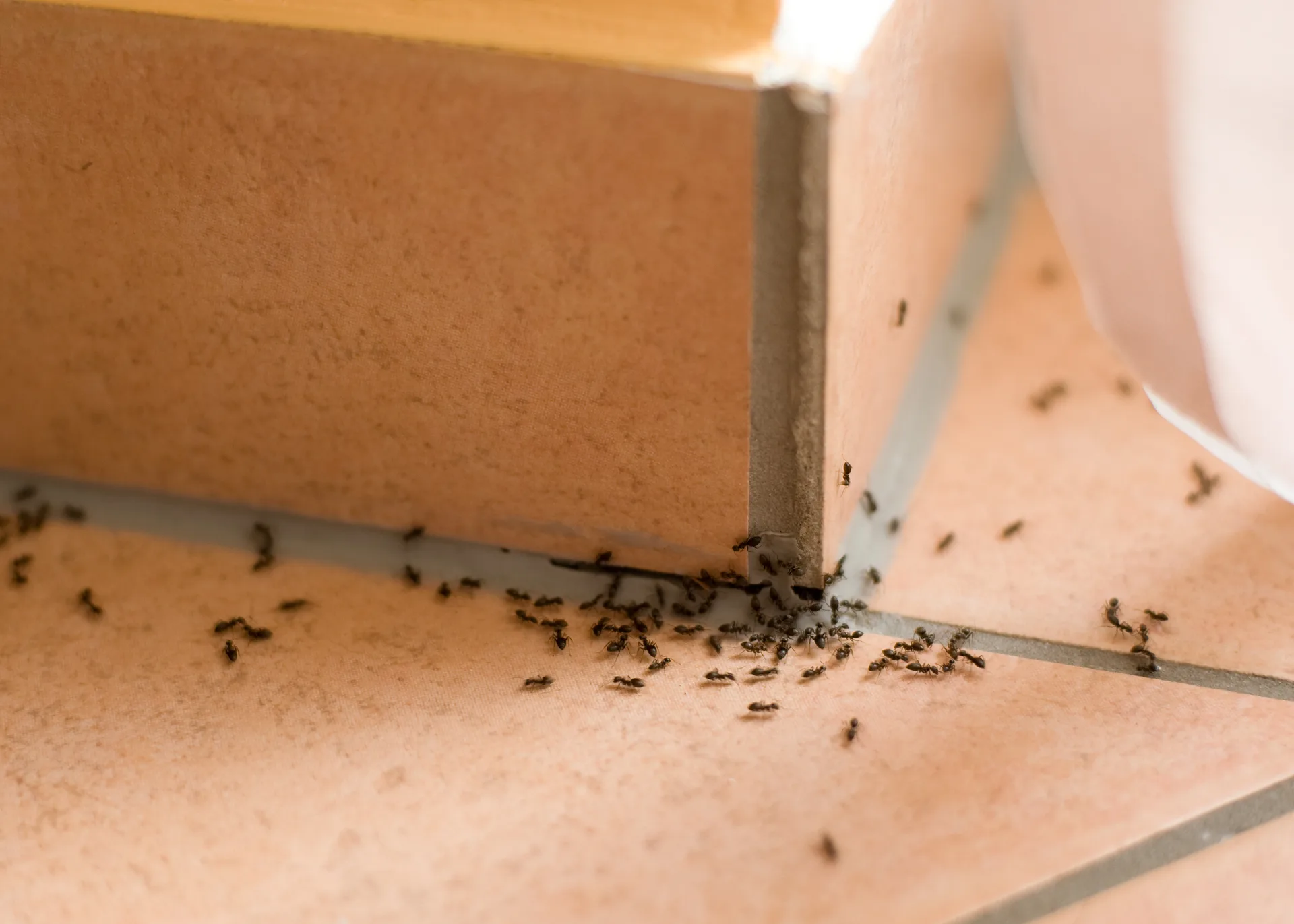
An Argentine ant trail disappearing from the kitchen tells you that one route is quiet. It does not tell you how many ants are foraging outside or whether linked nests remain. A better test records activity at the same sites before and after a plan, alongside the weather, moisture, and changes to food sources. California field research shows why the measure matters and why one yard cannot prove a universal result.
Start with a confirmed identification
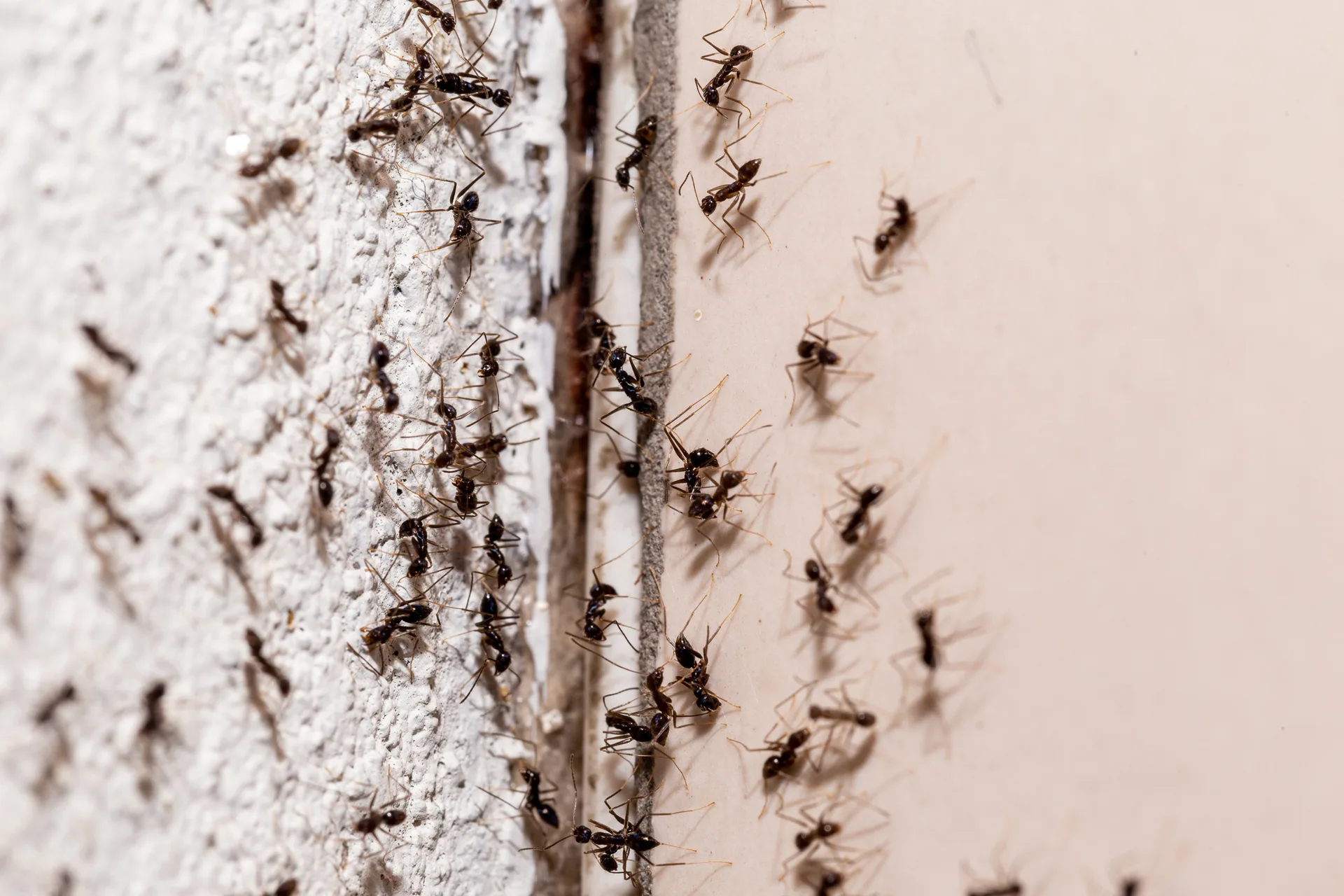
Argentine ants form colonies with multiple queens and can use connected nests across a developed landscape. Other ants in California need different control decisions. Save a close, clear image or specimen and trace the trail to its entry and outdoor route when safe. Note whether the ants seek sweets, protein, or water; preferences can shift. UC IPM advises identification, removing food and water, and choosing bait or other treatment according to the species. A visible line of workers is a clue about foraging, not a map of the full colony.
Read the California ant guideSources: UC IPM ant guidance
What the Riverside house study measured
Choe and colleagues tested several ant plans at homes in Riverside, California. One early test used bait once. A later test used five homes for each upkeep plan. The team tracked how much sugar water ants took from ten fixed stations at each home. Checks ran from summer into fall. This covers more routes than a count at one kitchen crack. Yet the home groups were small, and the study ran for one season in one region. Its bait mixes were made for research. They are not home recipes or directions for use.
Sources: Choe et al. (2021)
Separate knockdown from ongoing control
The Riverside work tested a perimeter knockdown followed by bait maintenance with spray-maintenance protocols. The authors reported support for the integrated approach. The small residential trial does not predict a precise reduction for another household. For a homeowner, the useful question is whether a proposed plan names its starting activity, the places to recheck, and what happens if foraging shifts to a different wall. A quiet trail the day after treatment is an early observation. Continued activity checks over the planned interval are needed to judge whether the response holds.
Sources: Choe et al. (2021)
Moisture can move the foraging pattern
Menke and Holway added water in outdoor study sites. Argentine ants grew more common and spread there. After watering stopped, they pulled back from some areas. This was an outdoor ecology study, not a home treatment trial. It gives a reason to check leaks and watering near a home, but cannot tell you how much fixing a hose bib will help. Note rain and watering changes when tracking ants. A seasonal drop could otherwise be mistaken for a treatment result.
Sources: Menke and Holway (2006)
Do not borrow an orchard percentage for a kitchen
In a separate California field study, teams used hydrogel bait more than once in vineyards and citrus groves. Ant activity fell by more than 80% at those sites. Farms differ from homes in size, setting, and repeat treatment. That rate does not predict what one home visit will do. The study shows the value of checking ant activity at fixed stations. Always give the setting when citing a study result.
Sources: Le et al. (2024)
Make a simple property record
Mark three to five safe observation points along the entry side and nearby exterior, with a date and a consistent short observation period. Photograph trails or note bait-station activity under the technician’s directions. Record rain, irrigation repairs, food removal, and any new route. Do not disturb a placed bait to count ants if the service plan says to leave it alone. If activity returns, ask whether the species, bait response, placement, and neighboring routes should be checked again. The aim is a comparable record, not a false claim that every nest has been found.
See what to do after rainQuestions for the written plan
Ask which ant species was found and where the team checked activity. What change would count as progress? When will they check those same places again? Ask what food, water, or gaps you can fix. Discuss where children and pets go, and what may affect nearby homes. Follow the product label and the pest pro’s advice. If the company says the colony is gone, ask what sites it checked to back that claim.
Compare the same places after each change
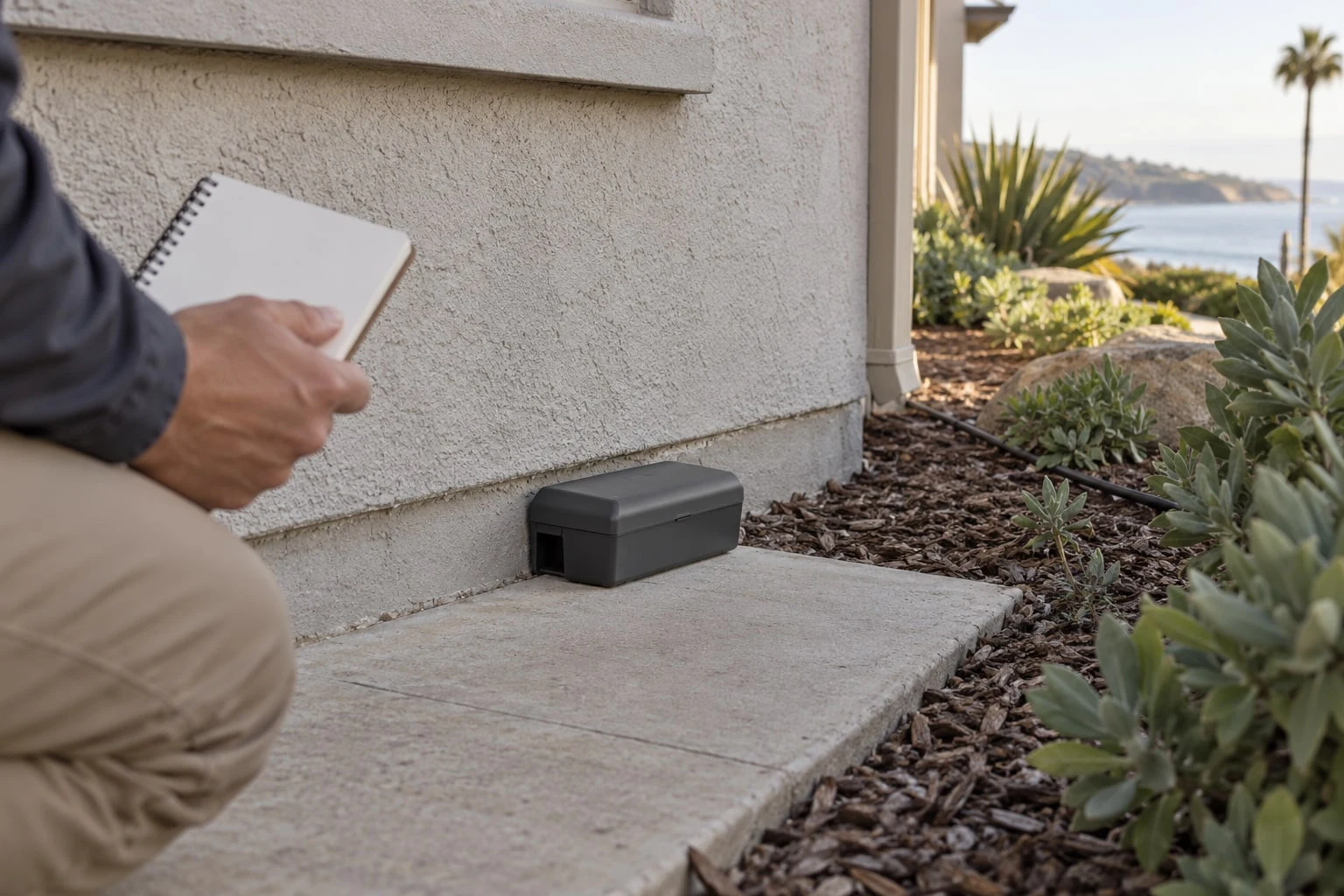
Sketch the foundation edge and number the places where ants cross or gather. At the same time of day, make a short observation at each safe point and note whether a trail is present and how strong it looks. If the technician uses monitoring stations, ask for the station record. Leave the stations in place and closed. Write down rain, irrigation, leak repairs, trash changes, and any food source you removed. A kitchen trail may stop when a crack is sealed even while ants remain active outdoors. That is useful improvement, but it answers an entry question rather than a colony question.
Sources: UC IPM ant guidance
Use the result to choose the next step
If interior trails stop and exterior activity is low at the same fixed sites, continue the agreed monitoring interval. If an interior route reappears after watering, check the entry and moisture conditions before assuming bait resistance. If workers ignore a bait, ask whether the species was confirmed, whether other food is available, and whether the bait was placed on a route they use. A treatment that protects one door may still leave foraging elsewhere on a connected property. Ask the company to state the boundary of its work and the evidence it will use for follow-up. Do not convert a quiet kitchen into a claim that the wider colony is gone.
Frequently Asked Questions
Does a vanished kitchen trail mean the colony is gone?
No. Workers may use another route or forage elsewhere. Compare repeat observations at fixed places and ask how the treatment will be followed up.
Can the Riverside study predict my result?
No. It involved small groups of Riverside homes and a specific summer-to-fall period. It helps show how to measure activity, not a guaranteed reduction at another property.
Why note irrigation and rain?
Moisture can change Argentine ant activity. Without that context, a change in foraging may be misattributed to treatment.
Sources
- Choe DH, Tay JW, Campbell K, Park H, Greenberg L, Rust MK. Development and Demonstration of Low-Impact IPM Strategy to Control Argentine Ants in Urban Residential Settings. Journal of Economic Entomology. 2021;114(4):1752–1757. doi:10.1093/jee/toab079. · Journal of Economic Entomology
- Menke SB, Holway DA. Abiotic factors control invasion by Argentine ants at the community scale. Journal of Animal Ecology. 2006;75(2):368–376. doi:10.1111/j.1365-2656.2006.01056.x. · Journal of Animal Ecology
- Le B et al. Field Evaluations of Biodegradable Boric Acid Hydrogel Baits for the Control of Argentine Ants: Promising Results in Vineyards and Citrus Orchards. California Agriculture. 2024;78(2):79–87. doi:10.3733/001c.120496. · California Agriculture
- Ants: Pest Notes, identification and management. · University of California Statewide Integrated Pest Management Program
Publisher
101 Exterminators Inc.
Based in Salinas, we serve Monterey, Santa Cruz, San Benito, Santa Clara, San Mateo, San Francisco, and Alameda counties. This article offers general guidance; an inspection is needed for property-specific findings.
About the company