
Ant Elimination
Ant Control in Fremont, CA
Argentine ants are behind nearly every ant call we take, and ant control in Fremont means treating the colony instead of the trail on the counter. 101 Exterminators identifies the species first, places slow-acting bait the workers carry home, and treats the exterior where the nest actually sits — under the mulch, along the slab edge, and at the irrigation line. SPCB Lic. #9119, family-run.
Home maintenance
How do you keep Argentine ants out of a Fremont home?
Seal the entry points and take away water. Fremont’s warm, dry late summers send Argentine ants indoors looking for water, and the winter rains, heaviest in February, push them in again when their nests flood. Irrigated yards across the flatlands support colonies that span whole blocks.
Fix leaks before the hot months
Repair dripping faucets, damp sink cabinets and leaking dishwasher lines by early summer. In August and September, those are the water sources that bring trails into the kitchen.
Caulk where each trail enters
Follow a trail back to its entry point, often a window frame, outlet, baseboard gap or pipe opening, and seal it with caulk.
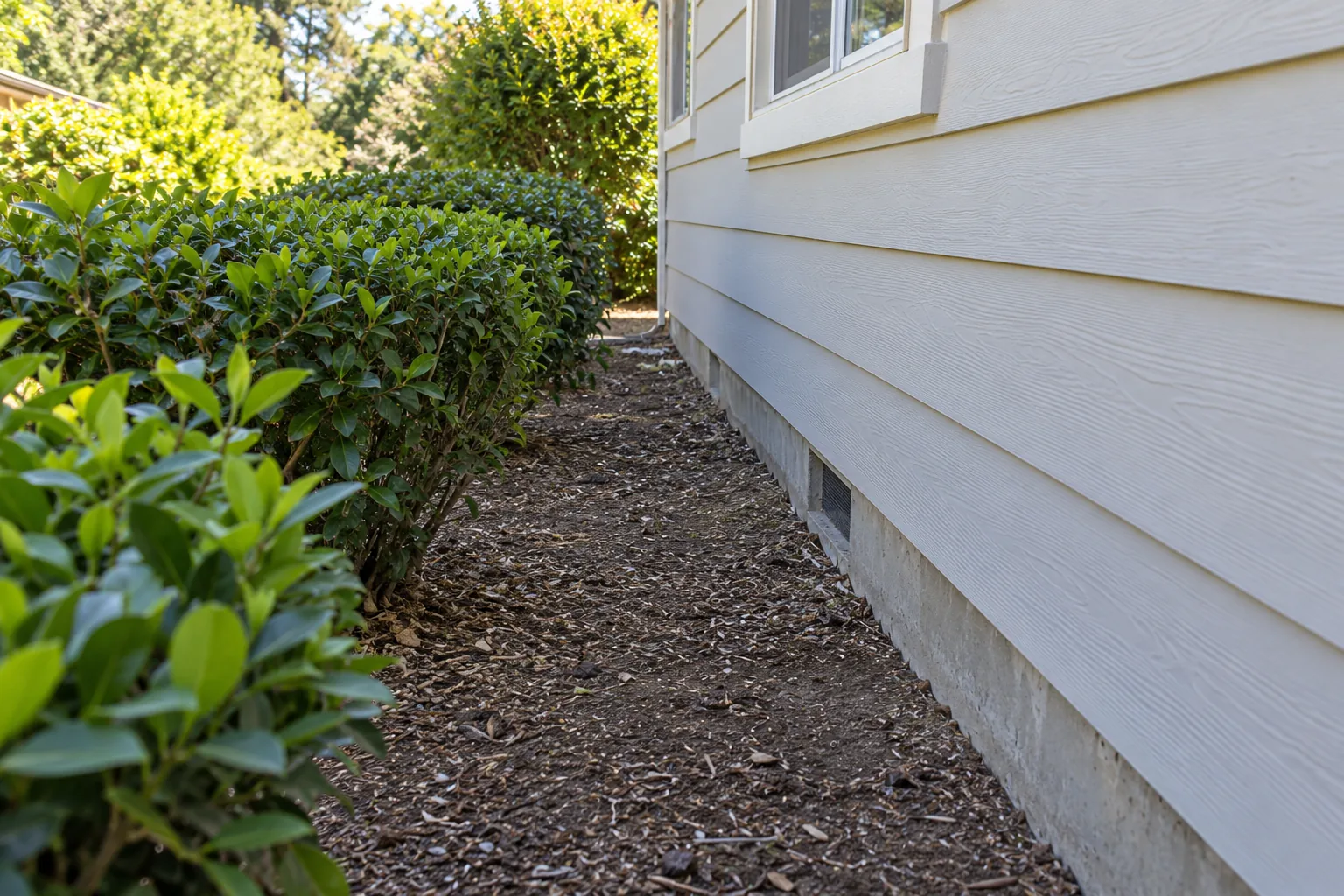
Keep a gap between plants and walls
Shrubs, vines and branches touching the house let ants walk past the foundation. Trim a clear strip around the walls and keep mulch thin there.
Hose aphids off nearby plants
Argentine ants tend aphids and scale for honeydew. Rinsing aphids off citrus, roses and hedges near the house removes a food source that keeps colonies close.
Seal sweets and pet food
Store sugar, honey, syrup and dry pet food in containers with tight lids, and wipe counters at night so ants that get in find nothing.
When to do it
Leak repairs in early summer and sealing in January, ahead of the February rains.
Maintenance guidance: UC IPM, Ants (Pest Notes 7411)
Warning Signs
When to Ask About Ant Control in Fremont
Species identification, followed by bait placement for slow-acting colony elimination. For carpenter ants — which nest in moisture-damaged wood — we identify and treat the nest location directly. For fire ant mounds, we use targeted mound treatments plus a broadcast perimeter application. Exterior perimeter liquid treatments are applied to prevent re-entry, with interior gel bait placed in active foraging areas.
Foraging trails along baseboards, windowsills, counters, or appliances — especially in kitchen
Live ants in kitchen cabinets, under the sink, near pet food, or around any sugar/food source
Sawdust-like frass near wood — indicates carpenter ant activity inside wood
Visible mounds in lawn or soil beds — fire ant indicator
Large (6–12mm) black ants with bent antennae in bathrooms or attic — carpenter ants
Repeated ant activity despite over-the-counter spray treatments — indicates spray-avoidance in colonies
How It Works
What to Expect from Ant Control in Fremont
Tell us where the ants enter, where the trail leads and how often it returns. The location of activity helps us decide what to inspect.
Species Identification
Misidentifying ant species leads to failed treatments. We identify the species present — Argentine, carpenter, fire, pavement, odorous house — before selecting treatment methodology.
Nesting Site Assessment
Carpenter ants nest in wood. Argentine ant colonies can extend across an entire block. Fire ants create visible mounds. Each species nests differently and requires us to find the colony before treating.
Targeted Bait & Barrier Treatment
Slow-acting gel baits are placed in foraging trails — workers carry the bait back to the queen, eliminating the colony from within. Exterior perimeter liquid is applied to prevent new entry.
Follow-Up & Assessment
We return to confirm colony suppression, replenish bait if needed, and treat any secondary colonies that become active as the primary colony is eliminated.
Why 101 Exterminators
Why Choose 101 Exterminators for Ant Control in Fremont
Species-Specific Treatment
Argentine ants, carpenter ants, and fire ants each require a different product and approach. Generic "ant spray" does not work equally for all species.
Bait-Based Colony Elimination
Slow-acting bait reaches the queen through worker activity. This is the only way to achieve lasting colony elimination without returning every few weeks.
Exterior Barrier Prevents Re-Entry
A liquid residual barrier on the perimeter prevents new foragers from adjacent colonies from entering — critical in Argentine ant supercolony territory.
Interior-Safe Methods
Gel bait placement in cracks and crevices does not require broadcast interior spraying. Food and dishware do not need to be removed for interior bait treatments.
Common Questions
Ant Control FAQs for Fremont
Why do ants come into my Fremont kitchen right after it rains?
Rain floods the nest. Argentine ants nest shallow — a few inches down, under mulch, pavers, or the slab edge — so when Fremont takes one of the storms that deliver nearly all of its fifteen or so annual inches between October and April, the colony moves up and inward through the weep screed and stem wall. That trail on your counter is a relocation, not a new infestation. It usually thins out when the yard drains, then repeats with the next system.
I sprayed the ant trail in my Fremont house and they were back in two days — why?
Because the trail is not the colony. The ants crossing your counter are foragers, and the queens producing replacements sit outside in the landscaping, often across several linked nests spanning multiple yards on the block. Contact sprays kill what they touch and can push a colony to split and open new trails elsewhere. Slow-acting bait works because workers carry it home and feed the brood and the queens before it takes effect.
Do Fremont ants come from the creek corridors or from the neighbors' yards?
Both, and the neighbor's yard is usually closer. Argentine ants spread along any continuous strip of moist soil, so a corridor like Sabercat Creek — one of the last stretches of natural riparian bank left in Fremont — acts as a reservoir. But much of the city's drainage runs in culverts under the flats, and the irrigated planting beds running fence to fence through neighborhoods like Parkmont are a highway of their own. That is why exterior work at your own foundation — mulch pulled back off the stucco, drip lines checked for leaks — changes results more than anything done indoors.
Local Pest Pressure
Common Pests We Treat in Fremont
Every area has its own pest profile shaped by climate, housing, and geography. These are the pests we see and treat most often in Fremont — tap any one to learn how to identify it and what treatment involves.
Ant Control · Fremont
Schedule Service in Fremont
Tell us what you have found and where. If you're new to us, start a recurring plan and we'll take 10% off your first service.