
101 Exterminators
Service Areas
Pests
Articles
Guides
Resources
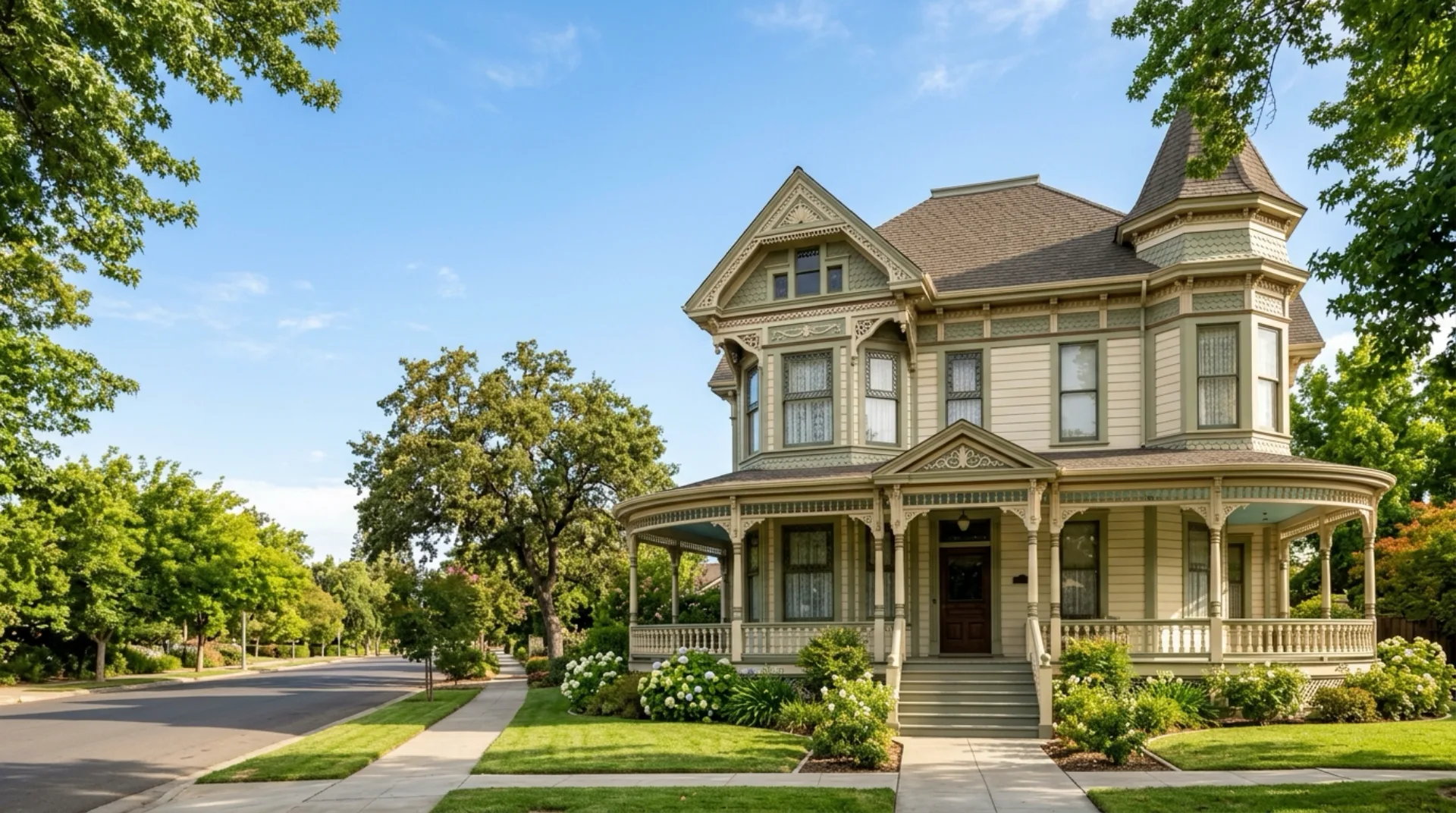
A restored Victorian home on a tree-lined Central California street — San Leandro, California service area

San Leandro Termite Control — Slab-on-Grade Specialists

San Leandro was laid out as a townsite in 1855 on the old Estudillo rancho, and the Portuguese families who arrived from the Azores and Hawaii in the 1880s accounted for close to two-thirds of the population by the 1910 census. Very little of that era survives in the housing. What replaced the farms and orchards after the Second World War is what a technician actually inspects here: block after block of 1940s to 1960s wood-frame houses, most of them on shallow slabs, now sixty to eighty years old. The Hayward Fault trace runs under Foothill Boulevard, and this segment of the fault creeps rather than staying locked, which is one reason slabs and foundation walls along that corridor crack over time. Termites do not care about the fault. They do use the cracks. 101 Exterminators inspects and treats San Leandro homes under SPCB License #9119.

(831) 500-1613Free pest evaluation · no obligation

Get a Free Estimate

Understanding San Leandro

Effective pest control begins with understanding the specific conditions that drive pest activity in your area. Here is what shapes the pest landscape in San Leandro.

Climate & Weather

San Leandro sits 56 feet above the bay and gets the warm side of East Bay weather, milder than San Francisco and close to what Oakland runs. Rain averages roughly 18 to 20 inches a year and falls almost entirely between November and March. Winters are never cold enough to shut anything down, so Argentine ants keep foraging through January and drywood colonies keep working inside wall cavities between swarms. Drywood swarmers fly August through October; subterranean swarms come with the rains, February through May.

Housing Stock

The city reads like a catalogue of post-war tract building. Most of the residential stock went up between the mid-1940s and the mid-1960s, in developments such as Washington Manor, Broadmoor, Bonaire and Floresta Gardens, and it is dominated by single-story wood-frame houses on shallow slabs with low or no crawl access. That construction has three habits worth knowing before an inspection: sill plates sitting close to grade, slab penetrations for plumbing that were never properly sealed, and attached garages framed straight into the house. Downtown and the blocks around Estudillo Avenue hold the small surviving pool of pre-1940 raised-foundation houses. Marina Boulevard and the belt west of the tracks are commercial, industrial and mixed-use.

Geography & Landscape

San Leandro Creek forms the northern boundary with Oakland and carries year-round moisture and rodent habitat straight along the city line. West of the freeway the ground flattens toward the Marina and the shoreline, where fill, a high water table and the storm-drain network create the best subterranean termite and Norway rat conditions in the city. East of Foothill Boulevard the land climbs into the San Leandro Hills, drier and warmer, and that grassland edge pushes rodents and yellowjackets down into the neighborhoods every fall. The Hayward Fault trace threads between the two halves, under Foothill.

Pest Pressure

Sixty to eighty years is long enough for a slab-on-grade tract house to accumulate every entry point a pest needs. Subterranean termites are the most common structural finding in the flatlands, working up through slab cracks and plumbing penetrations rather than along a visible foundation wall, which is why they are often missed until a floor sounds hollow near a bathroom. Drywood termites turn up in attic framing, eave blocking and garage headers. Argentine ants run the whole city and push indoors twice a year. The shoreline industrial belt, a legacy of the canneries and roasting plants that operated here for most of the twentieth century, sustains German cockroach and Norway rat pressure that a purely residential suburb would not carry.

All Services Available in San Leandro

Every service we provide is available throughout San Leandro. From termite inspections and fumigation to ongoing pest maintenance programs and crawl space services, we are your single point of contact for any pest challenge.

View all services

Why Local Expertise Matters

A San Leandro house is usually a slab, usually post-war, and usually has no crawl space to inspect from. That changes how the work is done. More time goes on the slab perimeter, the plumbing penetrations, the garage-to-house junction and the attic, and less on the areas a raised-foundation inspection would prioritize first. It also changes what shows up in the report, since a forty-year-old slab crack is a Section 2 finding whether or not anything has moved into it yet. We have been licensed in California since 2005, we hold SPCB License #9119, and our reports are filed with the Structural Pest Control Board for Alameda County escrow.

Part of Alameda County

San Leandro is part of our Alameda County service area. We serve all surrounding communities in the county.

Alameda County service area

20+

Years Serving Central California

A+

BBB Rating

7

Counties Covered

440+

5-Star Google Reviews

San Leandro Pest Control FAQs

My San Leandro house is on a concrete slab. Can it still get termites?

Yes, and the slab is often what hides them. Subterranean termites (Reticulitermes spp.) do not need to cross a visible foundation wall when there is a crack in the slab or an unsealed opening around a drain line, a supply line or a bath trap. They travel up through it into the sill plate and the wall framing above. That is the common pattern in San Leandro's post-war tract stock, where crawl access is limited or missing entirely. The signs to watch for are hollow-sounding baseboards, a floor that gives underfoot near a bathroom, mud packed into a slab crack or the edge of a garage floor, and swarmer wings on windowsills between February and May.

Does the Hayward Fault have anything to do with termite risk in San Leandro?

Indirectly, and it is worth understanding before an inspection. The fault trace runs under Foothill Boulevard, and this segment creeps steadily rather than staying locked, which is a known reason slabs, driveways and foundation walls along that corridor show progressive cracking. Termites are not responding to the fault. They are responding to the openings it leaves behind, because a crack that has widened over forty years is a direct route from soil to framing. On a WDO report that kind of opening is normally written as a Section 2 finding, meaning a condition likely to lead to infestation, rather than an active Section 1 infestation.

Do you write WDO reports for San Leandro condominiums and HOA properties?

Yes. We inspect condominium units and write SPCB-licensed WDO reports for Alameda County transactions, and we can coordinate with property management when a complex needs several units done at once. A condo report normally covers the unit interior plus any exterior area under the owner's exclusive control, while shared structures fall under the association's own inspection program. Sorting out which is which before escrow matters, because it decides who is responsible for a Section 1 correction. One distinction to keep straight: the free pest evaluation is a verbal walk-through with no written report, while the official inspection that produces the filed WDO report is a paid service. Call (831) 500-1613.

Free Pest Evaluation in San Leandro

CA licensed and insured. Written estimate before any work begins. Urgent pest situations are prioritized.

Trusted by San Leandro families since 2005