
Apartment Pest Control & Exterminator Services
The Best Apartment Pest Control
A German cockroach report from one apartment raises a question about the units around it, because cockroaches and bed bugs can move along the walls, plumbing and wiring that units share. We work for property managers, owners and HOA boards: we inspect the unit that called and the units connected to it, service the trash rooms, laundry rooms and grounds where pests feed and travel, give you the prep sheet each resident needs, and record every unit we entered and every unit we could not. 101 Exterminators serves apartment and multifamily buildings from Salinas to San Francisco and Berkeley under SPCB Lic. #9119.
Before You Book
Help Us Assess Your Apartment Pest Control Request
Tell us how many units are affected, which pests residents report, and whether hallways, laundry rooms or the exterior are involved.
Schedule ServiceHow We Work
Our Process
Every service follows a structured protocol designed to deliver effective, lasting results — not a temporary fix.
Tell Us About the Building
Send the address, the number of units, the pest and the units reporting it, with dates and any photos residents have. Tell us who arranges entry and whether an owner, an HOA board or a management company authorizes the work.
Inspect the Unit and Its Neighbors
We inspect the reporting unit, then the units that share its walls, ceiling, floor or plumbing run when the pest calls for it, along with the nearby common areas and exterior. Every unit on the list is recorded as entered or not entered, and a unit we could not get into is never marked clear.
Agree on the Scope and Tell Residents
You get a written scope naming the units, common areas, methods and visit schedule. We provide the prep sheet for the method, so residents know what to clear, bag or leave in place, and your team sends the notice of entry under the lease and local rules.
Follow Up in the Same Places
At follow-up we check the same units and the same monitor positions, so the counts compare. If activity continues, the record shows whether the cause is a unit nobody could enter, an open repair or a neighbor that was never checked.
What Sets Us Apart
Why Choose 101 Exterminators
California licensed and insured, with service across the published service area.
The Neighbors Get Checked
Cockroaches and bed bugs can move through shared walls and plumbing. We recommend which adjoining units to inspect from the pest and the layout, instead of treating one apartment and waiting for the next call.
A Record the Next Manager Can Read
Every visit lists the units entered, the units missed, the findings, the products applied and the repairs recommended. When a complaint comes back, the history is already written down.
Prep Sheets Residents Can Follow
Our bed bug and cockroach prep checklists are on our Resources page as printable PDFs. Residents can read them before the visit, and your team can attach them to the notice.
What Building Customers Say
Alexander Miller wrote in a Google review: "They service my whole complex and my individual unit." Lisa Lanford wrote: "Jimmy services our building every other month and is always pleasant and professional."
Recent Work
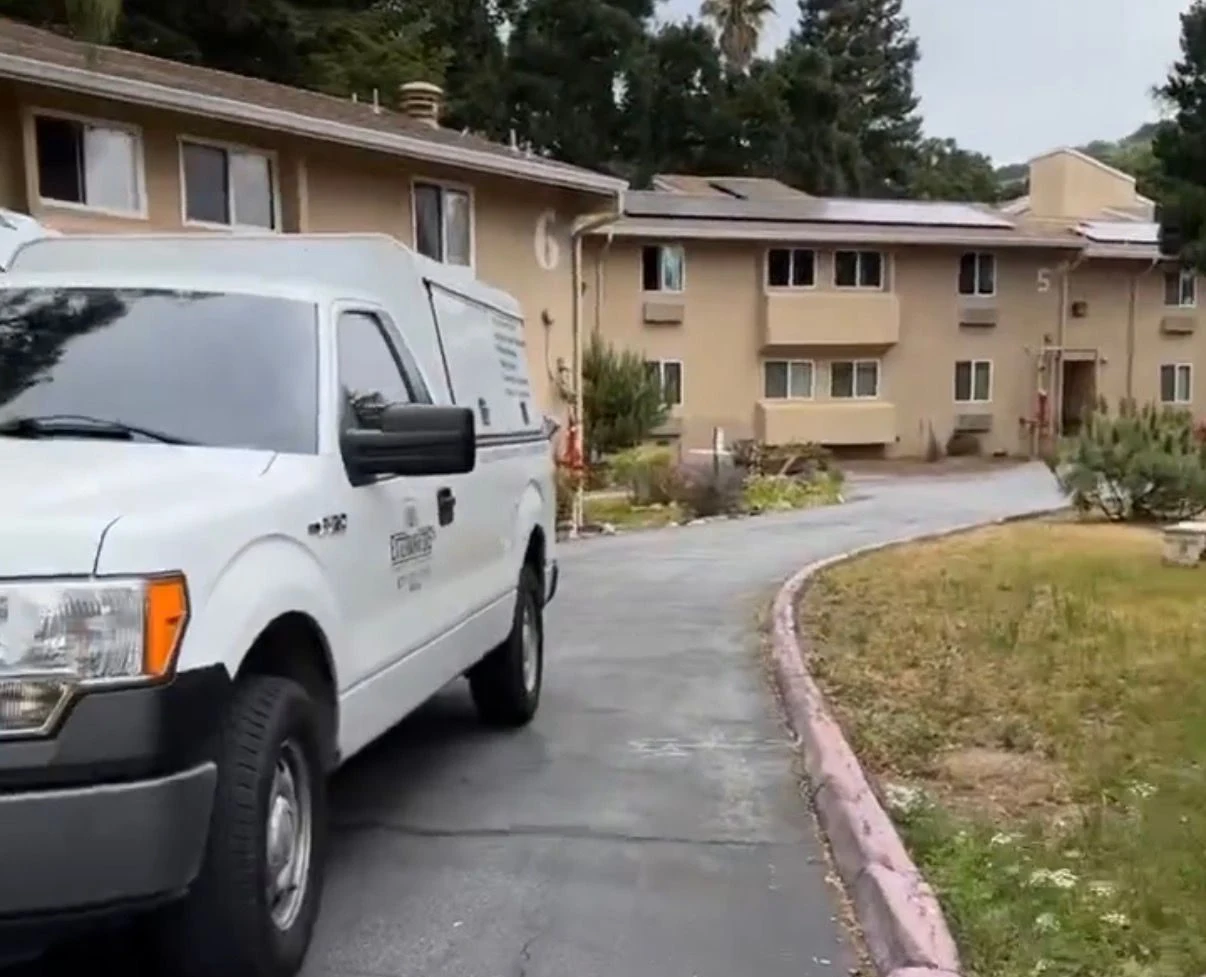
Recent Apartment Work
CA
Licensed & Insured
A+
BBB Rating
7
Counties Served
Browse the full process guide library for other services.
Pests We Treat
Pests Our Apartment Pest Control Work Targets
Different pests demand different methods. Tap any one to learn how to identify it and what professional treatment involves.
Common Questions
Frequently Asked Questions
Do you treat one apartment or the whole building?
It depends on the pest and the building. An ant trail at one kitchen window can be a single-unit job. German cockroaches and bed bugs are different: they can move between units through shared walls, ceilings and plumbing, so we recommend inspecting the units that share those routes before deciding the scope. Termite work and rodent exclusion are building-wide by nature. The written scope names every unit and common area included.
Who tells residents about the visit and arranges access?
Your team does, because notice of entry is governed by the lease and local rules. We make it easy to get right: before each visit you get the date, the units on the list and the prep each one needs. If a resident is not home or a unit is not ready, we record it as not entered and work out with you when to come back, rather than marking it clear.
What do residents need to do before treatment?
That depends on the method. For cockroaches, residents put food in closed containers, take out trash and cardboard, and clear the spots the technician needs to reach, such as under the sinks and around appliances, without emptying every cabinet. Bed bug treatment asks more, and residents should not start bagging or moving furniture until they have the instructions, because moving items can spread bugs to other rooms. Our printable bed bug and cockroach prep checklists are on our Resources page.
What records do we get after each visit?
A record of the units entered and the units we could not enter, the common areas serviced, what we found and where, what we applied, monitor counts where monitors are placed, and the repairs we recommend, such as a sink leak or an open pipe penetration. Keep it in the building's pest log, so the next complaint can be compared with the last visit.
Does an apartment building need a recurring plan?
A recurring plan puts the exterior and the common areas on a schedule, so the trash room and the foundation get checked whether or not anyone has called, and each complaint is compared against a running record. The visit interval comes from the inspection and the building's history. As a new customer, you get 10% off your first service with a recurring plan.
Do you work with HOA boards?
Yes. In an HOA, the common areas and exterior often fall to the association while each unit belongs to its owner, so the first step is agreeing who authorizes and pays for which spaces. The CC&Rs and the management agreement settle that. Once it is settled, the scope names the association's areas and any units the owners add.
Do you handle termites at apartment complexes?
Yes. We treat soil for subterranean termites at apartment complexes, and drywood termites in the framing may call for local treatment or fumigation, depending on how far they have spread. Termite work is scoped separately from routine pest service.
Service Locations
Where We Provide Apartment Pest Control
Service Areas
Apartment Pest Control Across the Central Coast and Bay Area
Browse the cities we serve, then tell us about the signs or conditions at your property.
Related Services
Serving 7 California Counties
Monterey · San Benito · Santa Cruz · Santa Clara · San Francisco · San Mateo · Alameda
Keep Reading
Guides & Articles
Ready to Get Started?
Book Your First Service
If you're new to us, start a recurring plan and we'll take 10% off your first service. Any proposed work is quoted in writing. Serving Monterey, San Benito, Santa Cruz, Santa Clara, San Francisco, San Mateo and Alameda counties.